Week 6 Focus

This week moves quickly from the basic language of ethics to the decisions organizations make when profit, duties, stakeholders, and social responsibility pull in different directions.

75 min in person~75 min asynchronousApplied case analysis

Weekly Design

Business Ethics

In Person • 75 minutes
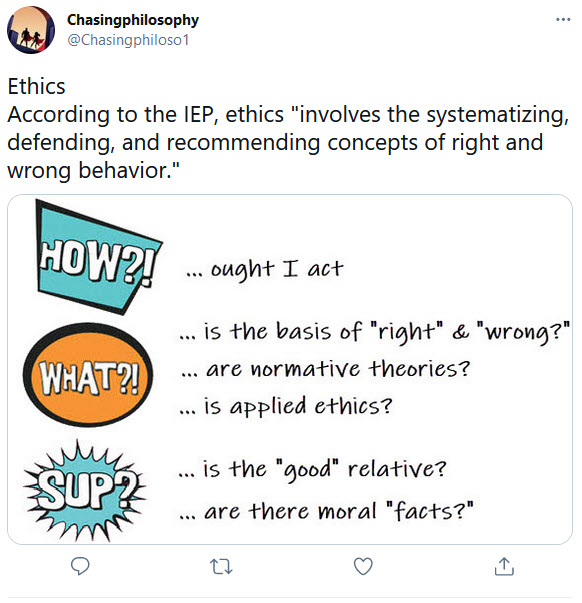
Ethics overview
Hover to enlarge • click for full-screen view

What is Business Ethics?

Much as ethics is the attempt to define and understand right and wrong—what is morally permissible for an individual—business ethics is the search for what is right and wrong within the workplace.

  • Moral agency: Are organizations moral agents?
  • Purpose: Do organizations have any moral end other than making money?
  • Obligations: What, if any, are a firm's obligations to its employees; what is owed by employees to employers?
  • Advertising: Does anything go?
  • Whistleblowing: Under what conditions is whistleblowing morally permissible?
  • CSR: Are companies obliged to care for the environment?
In-Class Decision Case

Pfizer & Enbrel: What is the Point of Business?

Pfizer faced a difficult question after an internal analysis suggested that patients treated with Enbrel appeared less likely to receive an Alzheimer’s diagnosis. Pursuing the signal would require an expensive clinical trial in a therapeutic area with a long record of failed studies.

Core tension: When a potentially important social benefit is uncertain and costly to investigate, what does the company owe patients, shareholders, the scientific community, and society?
  1. Was Pfizer justified in choosing not to pursue the Alzheimer’s research? Why?
  2. Did Pfizer have a duty to disclose the signal even if the evidence was preliminary?
  3. Which stakeholders should have mattered most in the decision?
  4. At what point, if any, should social welfare outweigh expected shareholder return?
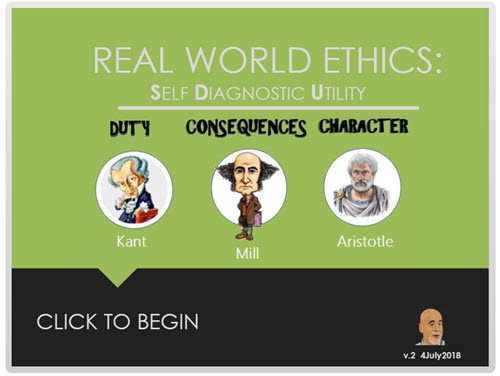
Real World Ethics self diagnostic utility
Hover to enlarge • click for full-screen view

Which Ethical Lens Do You Use?

Use the Self-Diagnostic Utility to compare three normative approaches: consequences, duty, and character. The goal is not to find the one “correct” theory, but to make the reasoning behind a business decision visible.
CSR in Practice

Asynchronous • Approximately 75 minutes
Start with the central CSR question:

Is the firm primarily responsible for generating returns for owners, or should it balance the interests of a broader set of stakeholders?

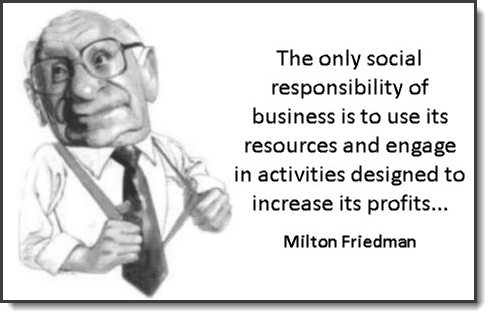
Milton Friedman quotation emphasizing profit
Shareholder emphasis: profit and owner value.
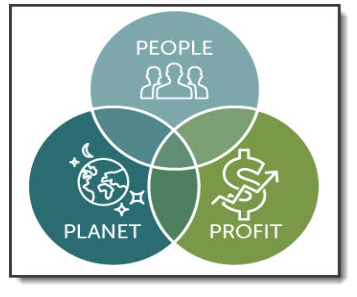
Triple Bottom Line diagram
Stakeholder emphasis: people, planet, and profit.
Hover over either image to enlarge • click for full-screen view

From Ethics to Corporate Social Responsibility

Corporate social responsibility asks what obligations an organization undertakes to protect and enhance the society in which it operates. In practice, firms can respond to those obligations at very different levels.

ObstructionistDo as little as possible and attempt to conceal or avoid responsibility for negative behavior.
DefensiveMeet legal requirements, but do not voluntarily go further.
AccommodativeMeet legal and ethical expectations and go further in selected cases.
ProactiveActively seek opportunities to contribute and take initiative on social responsibility.
Four Levels: Applied CSR Interaction

Apply the four CSR response levels to a randomized set of business situations and Venturea decisions. Each question remains visible while possible responses appear one at a time. You may select a response while it is live or wait until all four choices have been presented.

The activity is automatically scored and records your completed result for the instructor.

Resources

Begin with the video. Then use the infographics as quick reference tools before the Knowledge Check.

The Price of Principles

Review how ethical principles shape choices when business value, obligations, and consequences point in different directions.

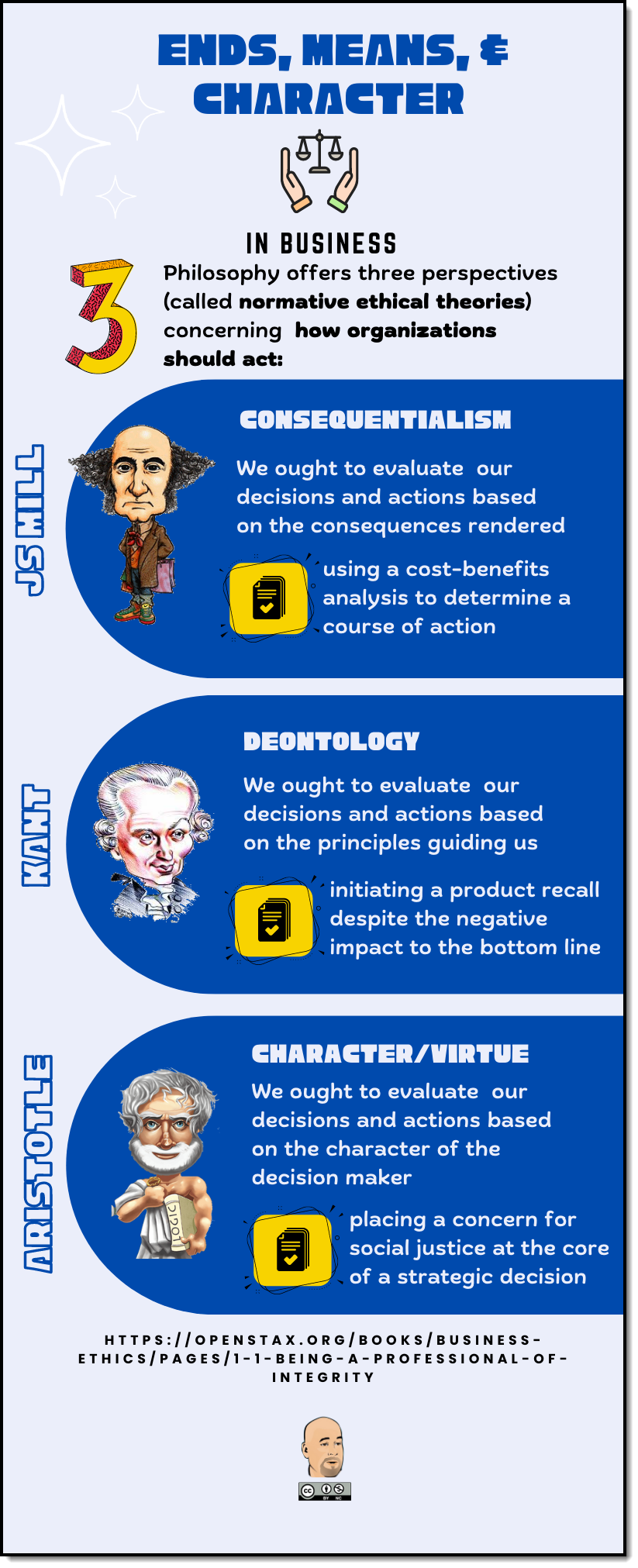
Ends, Means, & Character

A quick comparison of consequentialism, deontology, and character/virtue as lenses for business decisions.

Ends, Means, and Character infographic

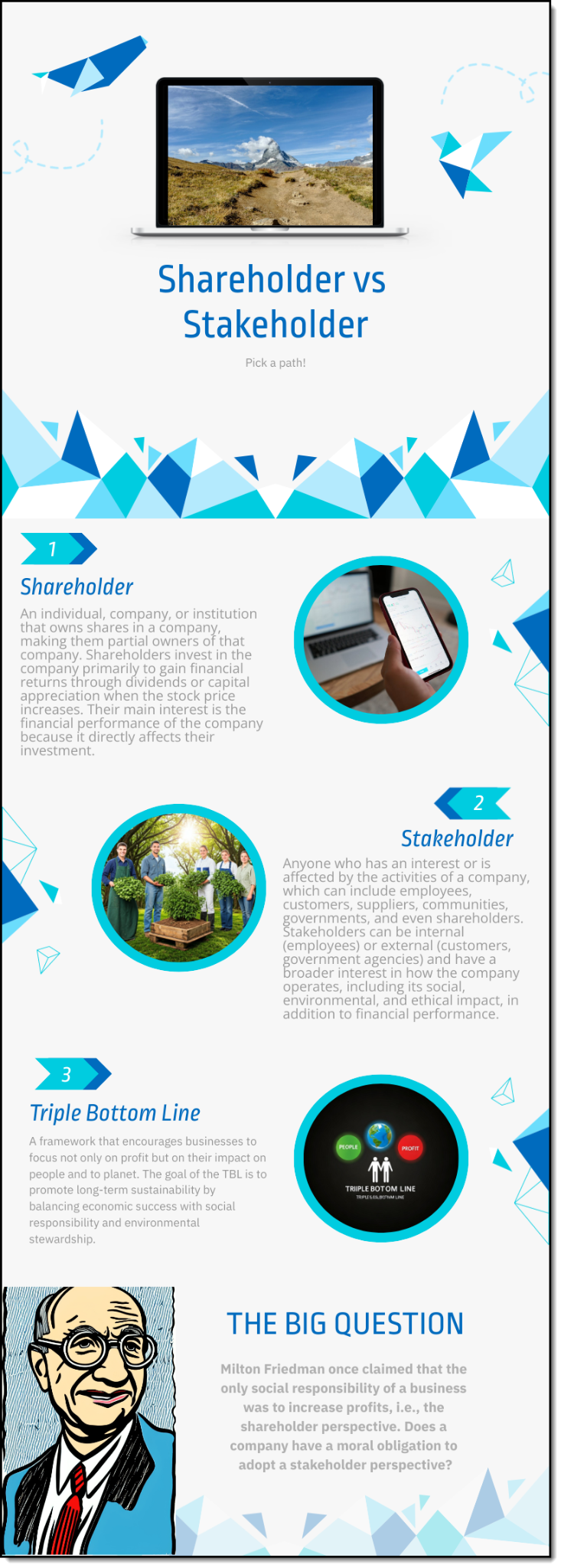
Shareholder vs. Stakeholder

Compare a profit-centered shareholder view with a broader stakeholder and Triple Bottom Line perspective.

Shareholder versus Stakeholder infographic

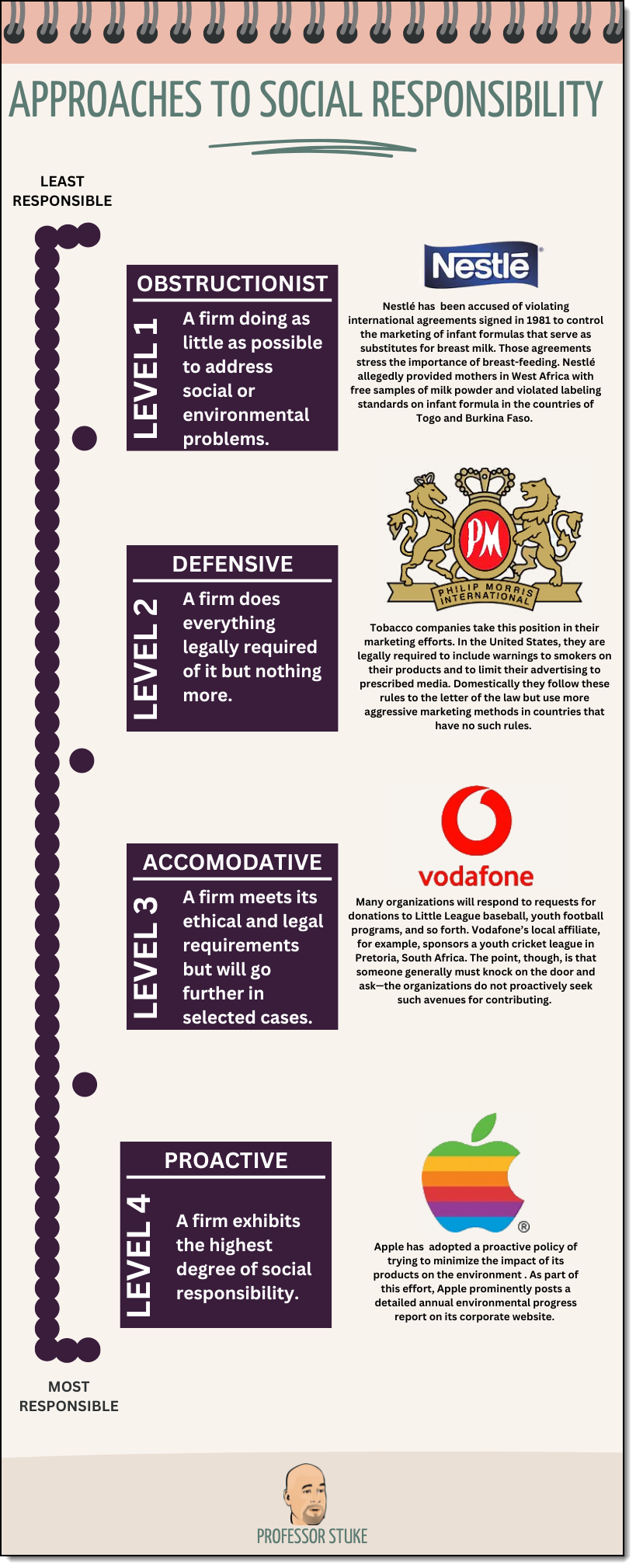
Approaches to Social Responsibility

Review the obstructionist, defensive, accommodative, and proactive stances used in the asynchronous activity.

Four approaches to social responsibility infographic
Deep Dive Ethics in International Business podcast thumbnail

Deep Dive: Ethics & International Business

Prefer to listen? Revisit business ethics, CSR, stakeholder responsibilities, bribery, and the challenge of making defensible decisions across different legal and cultural environments.

Listen to the Deep Dive

Week 6 Glossary

Use these terms as a quick reference while working through the ethics and CSR material.

Ethics

An individual’s personal beliefs about whether a decision, behavior, or action is right or wrong.

Ethical Behavior

Behavior that conforms to generally accepted social norms.

Unethical Behavior

Behavior that does not conform to generally accepted social norms.

Conflict of Interest

A situation in which a decision potentially benefits the individual to the possible detriment of the organization.

Code of Ethics

Written guidelines that detail how employees are to treat suppliers, customers, competitors, and other constituents.

Corporate Social Responsibility (CSR)

The set of obligations an organization undertakes to protect and enhance the society in which it functions.

Stakeholder Model

A governance approach that emphasizes considering the interests of all stakeholders (e.g., customers, employees, community) in addition to shareholders.

Shareholder Model

A traditional governance approach that primarily focuses on maximizing profits for shareholders.

Obstructionist Stance

A social responsibility approach where organizations do as little as possible and attempt to cover up any negative behavior.

Defensive Stance

A social responsibility approach where firms meet legal requirements but do not go beyond them.

Accommodative Stance

A social responsibility approach where firms meet legal and ethical requirements and go beyond them in selected instances.

Proactive Stance

A social responsibility approach where firms actively seek opportunities to contribute to society and take the initiative in performing socially responsibly.

Whistle-blowing

The disclosure by an employee of illegal or unethical conduct within the organization.

Foreign Corrupt Practices Act (FCPA)

A U.S. law that prohibits U.S. firms from bribing foreign government officials to gain or retain business.

Bribery Act

A British law applying to corrupt activities performed anywhere in the world by firms with a business presence in the United Kingdom.

Anglo-Saxon Approach

Views the state, market, and civil society as separate, competitive, and antagonistic.

Asian Approach

Believes in a close collaboration between the state and the market, with a lesser role for civil society.

Continental European Approach

Sees all three actors as relatively equal collaborators.

International Labor Organization (ILO)

Monitors working conditions in factories in developing countries.

Alien Tort Claims Act

Allows U.S. multinationals to be held responsible for human rights abuses by foreign governments if the companies benefited from those abuses.

Anti-Bribery Convention of the OECD

Mandates jail time for those convicted of paying bribes.

Week 6 Knowledge Check

Ethics in Action

Complete a randomized 10-question knowledge check drawn from a 15-question pool. The questions emphasize application rather than historical recall and use cases involving CSR, shareholder and stakeholder perspectives, greenwashing, bribery, consequential reasoning, and duty-based reasoning.

Each question remains visible while the answer choices appear one at a time.

Looking ahead: Week 7 turns from ethical obligations to international trade and the country-based theories used to explain why nations trade.