Week 7 Focus

Week 7 shifts from the environment surrounding international business to the economic logic of trade. Classical country-based theories ask why one nation exports certain products while importing others—and why specialization can make both trading partners better off.

75 min in person~75 min asynchronousCountry-based trade theory

Weekly Design

In-Person: Trade Theory in Action

75 minutes • Economic choices + Trade Minister

1. Designing Utopia

Begin by building a society from the ground up. Your team makes choices about markets, ownership, regulation, public services, and trade—then considers the economic pressures those choices create.

2. Why Trade Matters

Connect voluntary exchange and specialization to scarcity, opportunity cost, comparative advantage, and the gains from trade.
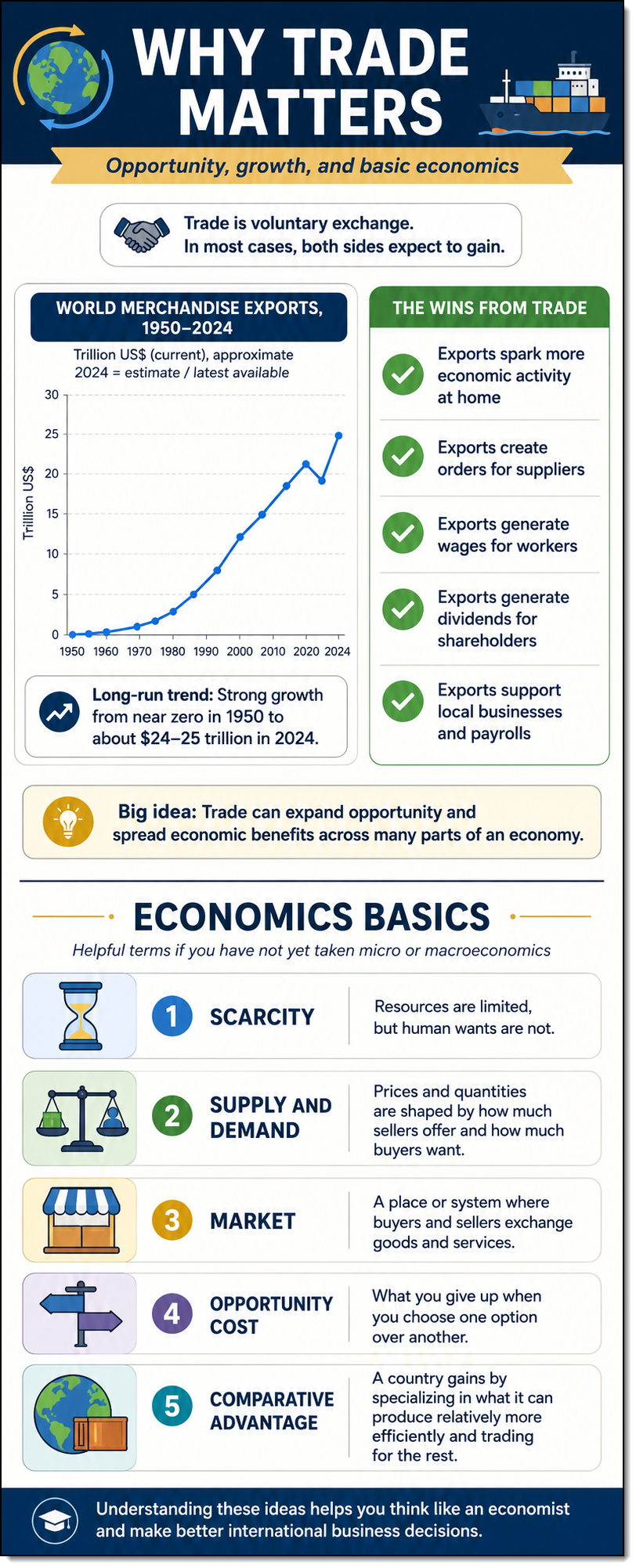
Why Trade Matters infographic
Hover to enlarge • click for full-screen view

3. Country-Based Trade Theories

Use the trade lesson to introduce the classical theories that frame the week.

MercantilismAbsolute AdvantageComparative AdvantageRelative Factor EndowmentsLeontief Paradox

Trade Minister: In the National Interest

Finish the in-person session by taking the role of trade minister. Across five fictional-country missions, make production and trade decisions first; then use the theory reveal to connect each choice to the country-based logic at work.
Asynchronous: Place Your Bet

Individual • Country-based theories review

Place Your Bet turns the country-based theories into a short decision challenge. Read the scenario, decide which theory or concept best explains what is happening, and choose how much confidence to place behind your answer.

What you are reviewing

MercantilismAbsolute AdvantageComparative AdvantageOpportunity CostFactor EndowmentsLeontief Paradox

The purpose is not to memorize names. Use each theory to identify the logic behind a country's trade pattern or policy choice.

Resources

Begin with the video, then use the infographics as quick-reference tools. The podcast gives you another way to review the same ideas.

Theories of International Trade

A short review of the country-based theories introduced this week.

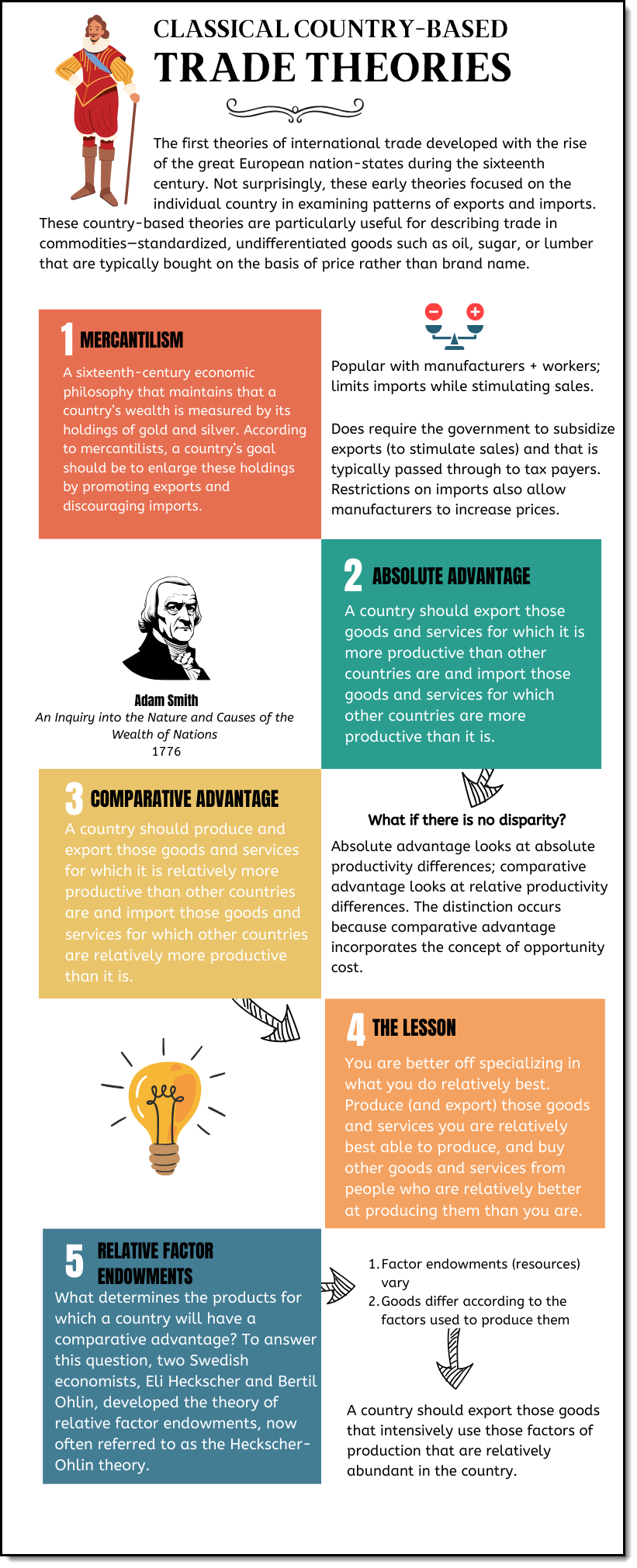
Classical Country-Based Trade Theories

Review mercantilism, absolute advantage, comparative advantage, relative factor endowments, and the Leontief challenge.

Classical Country-Based Trade Theories infographic

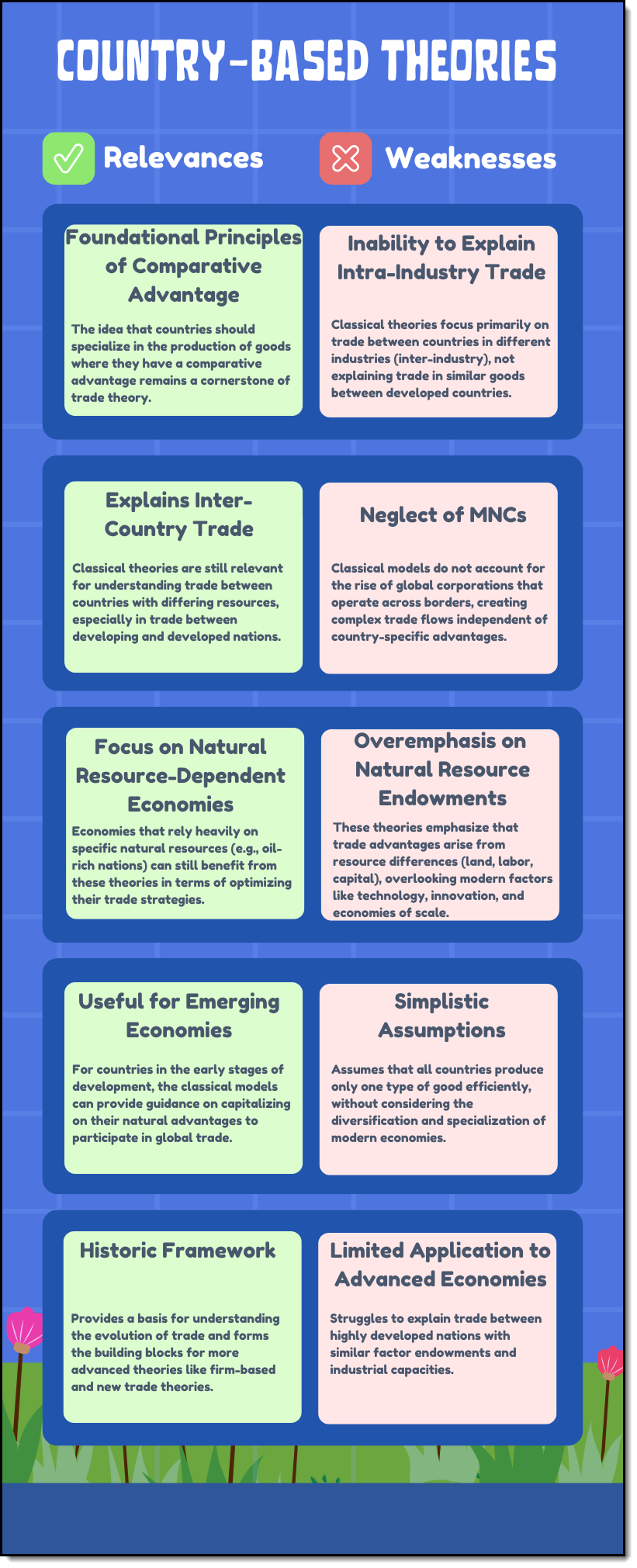
Country-Based Theories: Relevance & Weaknesses

Use the strengths and limitations of the classical theories to judge where they remain useful—and where newer explanations are needed.

Country-Based Theories relevance and weaknesses infographic
Deep Dive Country Based Theories podcast thumbnail

Deep Dive: Country-Based Theories

Prefer to listen? Review the classical logic behind mercantilism, absolute advantage, comparative advantage, factor endowments, and the evidence that complicates these models.

Listen to the Deep Dive

Week 7 Glossary

These terms focus specifically on the country-based trade theories used in Week 7.

International Trade

The exchange of goods and services across national borders.

Balance of Trade

The difference between the value of a country's exports and the value of its imports.

Mercantilism

The view that national wealth is strengthened by maximizing exports and minimizing imports, historically to accumulate gold and silver.

Absolute Advantage

The ability of a country to produce a good or service more efficiently than another country.

Comparative Advantage

The ability to produce a good or service at a lower opportunity cost than another country.

Opportunity Cost

The value of what is given up in order to obtain something else.

Specialization

Concentrating production on goods or services a country can produce relatively efficiently and trading for others.

Relative Factor Endowments

The Heckscher–Ohlin view that countries tend to export products that intensively use resources they possess in relative abundance.

Factor Endowment

A country's supply of productive resources such as labor, capital, land, or natural resources.

Leontief Paradox

The finding that U.S. exports appeared less capital-intensive than its imports, contrary to a straightforward prediction of the Heckscher–Ohlin model.

Intraindustry Trade

Trade in similar products within the same industry between countries.

Neomercantilism

Modern policies that use trade restrictions or export promotion to protect or strengthen selected domestic industries.

Week 7 Knowledge Check

Country-Based Trade Theories

Yes—this KC was already created. It uses the same one-answer-at-a-time cycling format introduced in Week 6, with a randomized question set and instructor review console.

The instructor console records student name, score, completion time, and a Review view that displays the questions and responses in order.

Looking ahead: Week 8 moves from country-based explanations of trade to firm-based theories that explain how firms, products, scale, innovation, and competitive behavior shape international trade.