Where should Venturea compete next?

A foreign market can look promising without being the right choice for a company. A large population, rapid growth, or low costs may attract your attention—but you still need to ask whether the customers, competition, and operating conditions fit what the company can deliver.

This week, you will evaluate foreign markets from Venturea’s perspective. In class, use Market Scout to compare Zantor, Vormia, and Xandoria. Then work individually through The Expansion Audit to examine a proposal for Vormia, weighing its direct and opportunity costs, expected benefits, and risks.

75 min in person~75 min asynchronousForeign Market Analysis

Your Work This Week

In-Person Session

75 minutes

Market Scout: Seeing the Future

Join your assigned team and investigate three possible markets for Venturea: Zantor, Vormia, and Xandoria. Use the Seeing the Future infographic to guide your analysis of market potential, competition, legal and political conditions, and sociocultural fit.

Use one device for your team. Read the evidence in each round, discuss the alternatives, and lock in one response. As you receive new information, revisit your assumptions. Compare your reasoning with the feedback, then recommend a market and identify the unresolved risk that could change your choice.

Plan for 35–45 minutes. You can earn up to 40 points across four evidence rounds. Your final recommendation is unscored; support it with specific evidence and be ready to explain its tradeoffs.

Your challenge: What evidence would justify choosing a market—and what would make you reconsider? Look beyond an attractive headline number. Support your decisions with evidence, identify the tradeoffs, and name the uncertainty that still needs to be resolved.
Launch Market Scout

Asynchronous Session

Approximately 75 minutes

The Expansion Audit

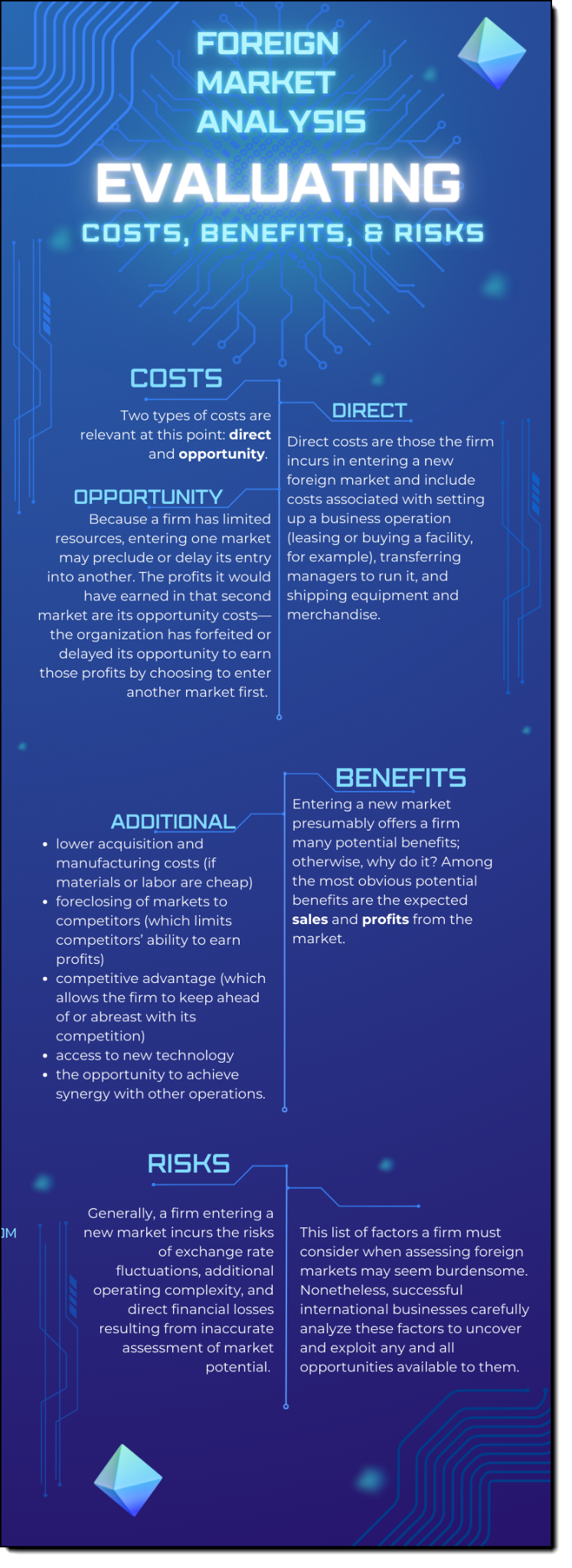
Work on your own as a Venturea analyst reviewing a proposed expansion into Vormia. Start with the Evaluating the Market infographic, then open your executive inbox to examine financial notes, customer evidence, and operating-risk updates.

Enter your name and read all three documents in each inbox file. Make two linked decisions: identify the weakness in the proposal and choose the best response. Submit both selections together, review the feedback, and use what you learned in the next file.

Distinguish direct costs from the value of opportunities Venturea would give up. Test the claims about sales and profits, consider currency and operating risks, and finish by recommending what the board should do next.

Plan for 25–35 minutes, plus time to review the infographic and glossary. You can earn up to 80 points across eight decisions. Your answers lock when you submit each file, so check both selections before continuing.

Your audit challenge: An attractive market does not automatically make a sound proposal. What has Venturea overlooked, which benefits are supported by evidence, and what must change before you would recommend committing resources?
Launch The Expansion Audit

Resources

Foreign Market Analysis

Begin here for an overview of how firms evaluate foreign markets before selecting an entry strategy.

Seeing the Future: assessing the potential of alternative markets

Seeing the Future

Market potential, competition, legal/political conditions, and sociocultural influences.

Foreign Market Analysis: evaluating costs, benefits, and risks

Evaluating the Market

Direct and opportunity costs, potential benefits, and the risks of foreign expansion.

Deep Dive Foreign Market Analysis podcast cover

Foreign Market Analysis

Use this episode to review how firms evaluate market attractiveness and weigh the costs, benefits, and risks of foreign expansion.

Listen to the Episode

Week 11 Glossary

Foreign Market Analysis: A systematic assessment of a foreign market’s attractiveness and fit with a firm’s goals and capabilities.

Market Potential: The total demand for a product or service in a particular market, often assessed by factors like population, GDP, and consumption patterns.

Competition: The firms and substitute offerings competing for customers in a market, including their strengths and likely responses to entry.

Direct Costs: Expenses directly associated with entering or operating in a market, such as research, distribution, staffing, and compliance.

Opportunity Costs: The value of the next-best alternative forgone when resources are committed to a particular market.

Potential Benefits: Expected gains from expansion, such as additional sales, access to resources, or learning opportunities.

Market Risk: Uncertainty about demand, competitive responses, or other conditions that could reduce expected returns.

Political Risk: The possibility that political decisions or events will adversely affect a firm’s operations or returns.

Legal and Regulatory Conditions: The laws and rules governing business activity in a market, including product standards and contractual obligations.

Trade Barriers: Government-imposed restrictions on the free flow of goods and services across borders, such as tariffs and quotas.

Sociocultural Influences: The customs, beliefs, values, and behaviors of a society that can impact business decisions and consumer preferences in a foreign market.

Week 11 Knowledge Check

Foreign Market Analysis

After reviewing the glossary, both infographics, and the video, check your understanding of market potential, competition, legal and cultural conditions, and the costs, benefits, and risks of expansion. Enter your name and complete 10 randomly selected questions.

Answer choices appear one at a time. Wait three seconds at the start of each question, then watch each answer for three seconds with a one-second blank between choices. Select an answer while it is visible, or watch another cycle before deciding. Each correct answer earns 10 points, for a maximum of 100.

Launch the Week 11 Knowledge Check
Looking ahead: Week 12 moves from choosing a foreign market to choosing how to enter it. You will compare modes of entry and weigh their costs, potential returns, control, and risk to recommend a practical approach for Venturea.