Organization structure and control systems
International strategy depends on an organizational structure that helps people carry it out. Chapter 8 examines how firms adapt their structures as their international activities expand and their strategies change. Managers must consider the firm’s size, technology, geographic reach, and operating environment when deciding how to organize work and assign authority.
This week, we will compare traditional and emerging organizational forms, including functional, product, geographic, matrix, and network structures. We will examine how firms balance global coordination with local responsiveness, how digital technology and teams reshape organizational relationships, and how structural choices affect where decisions are made.
As you work through the chapter, consider a US-based company expanding across several countries. Which decisions should remain at headquarters, and which should local managers make? How can the company coordinate its operations and monitor performance while responding to different market conditions?
Chapter 8 Overview
Listen to the podcast before exploring the chapter.
8.I Organizational Structure
Click or tap the numbered circles to explore supplemental facts. Use Magnify for a larger view; Reset clears the circles you have visited.
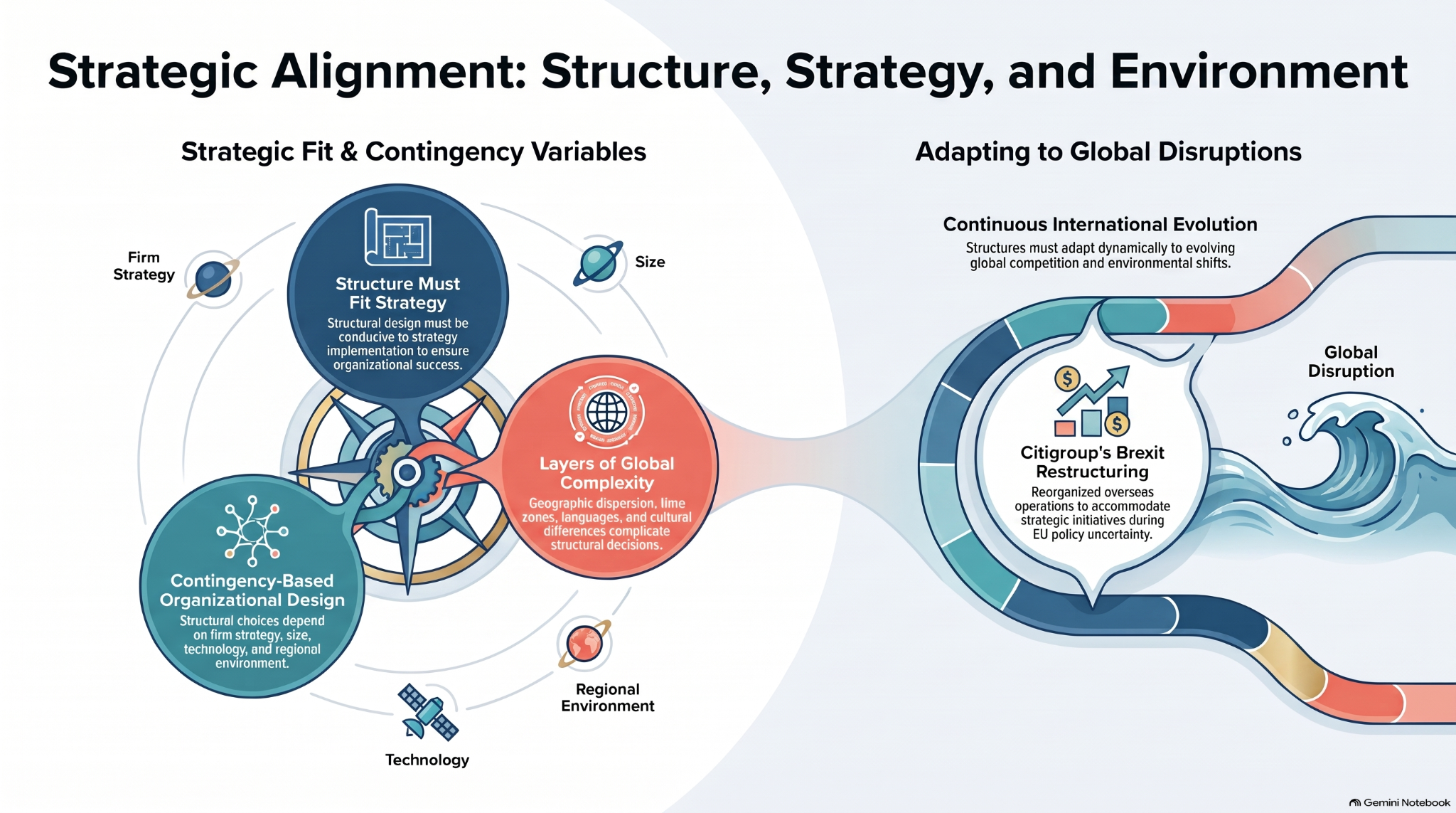
Visualize Your Thinking - Section I
Consider whether structure matters, where authority belongs, and how organizational needs differ.
Connecting to class activities…
Class Responses
Organizational Structure
8.II Evolution and Change in MNC Organizational Structures
Click or tap the numbered circles to explore supplemental facts. Use Magnify for a larger view; Reset clears the circles you have visited.
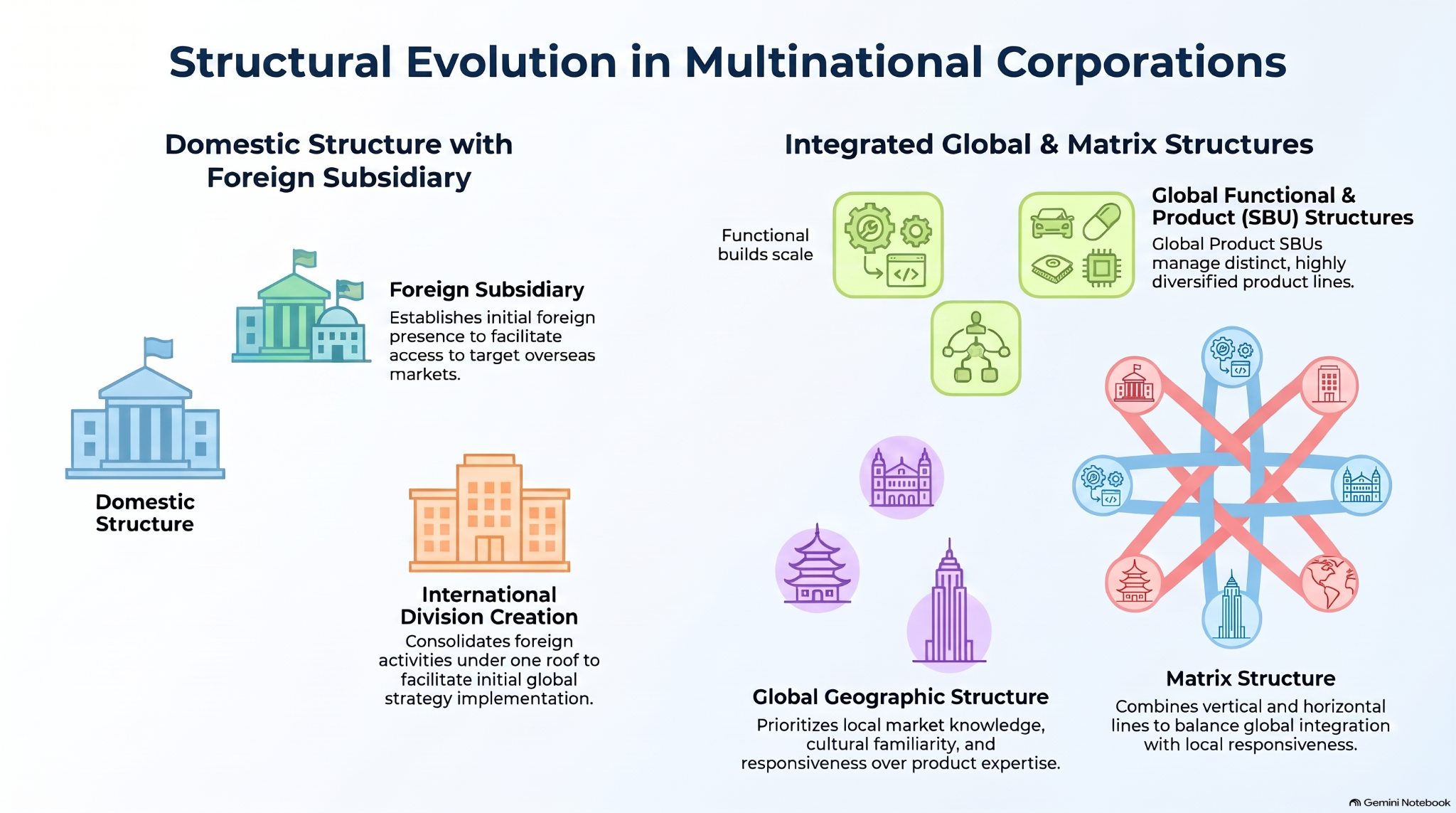
Visualize Your Thinking - Section II
Consider structural evolution, product and regional priorities, and coordination across divisions.
Connecting to class activities…
Class Responses
Evolution and Change in MNC Organizational Structures
8.III Organizing for Globalizations
Click or tap the numbered circles to explore supplemental facts. Use Magnify for a larger view; Reset clears the circles you have visited.
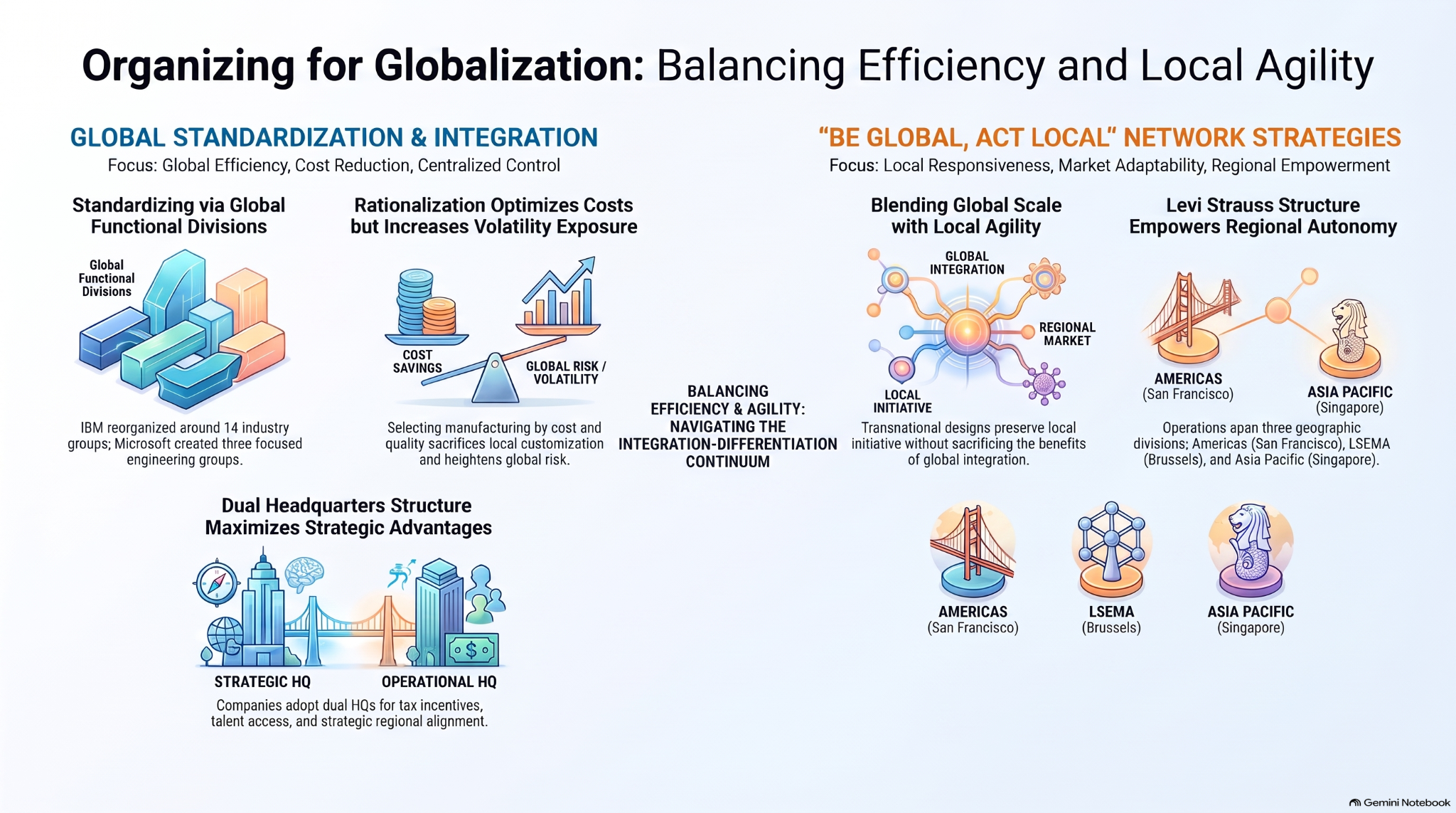
Visualize Your Thinking - Section III
Consider global integration, local responsiveness, and the tradeoffs in coordinating international operations.
Connecting to class activities…
Class Responses
Organizing for Globalizations
8.IV Emergent Structural Forms
Click or tap the numbered circles to explore supplemental facts. Use Magnify for a larger view; Reset clears the circles you have visited.
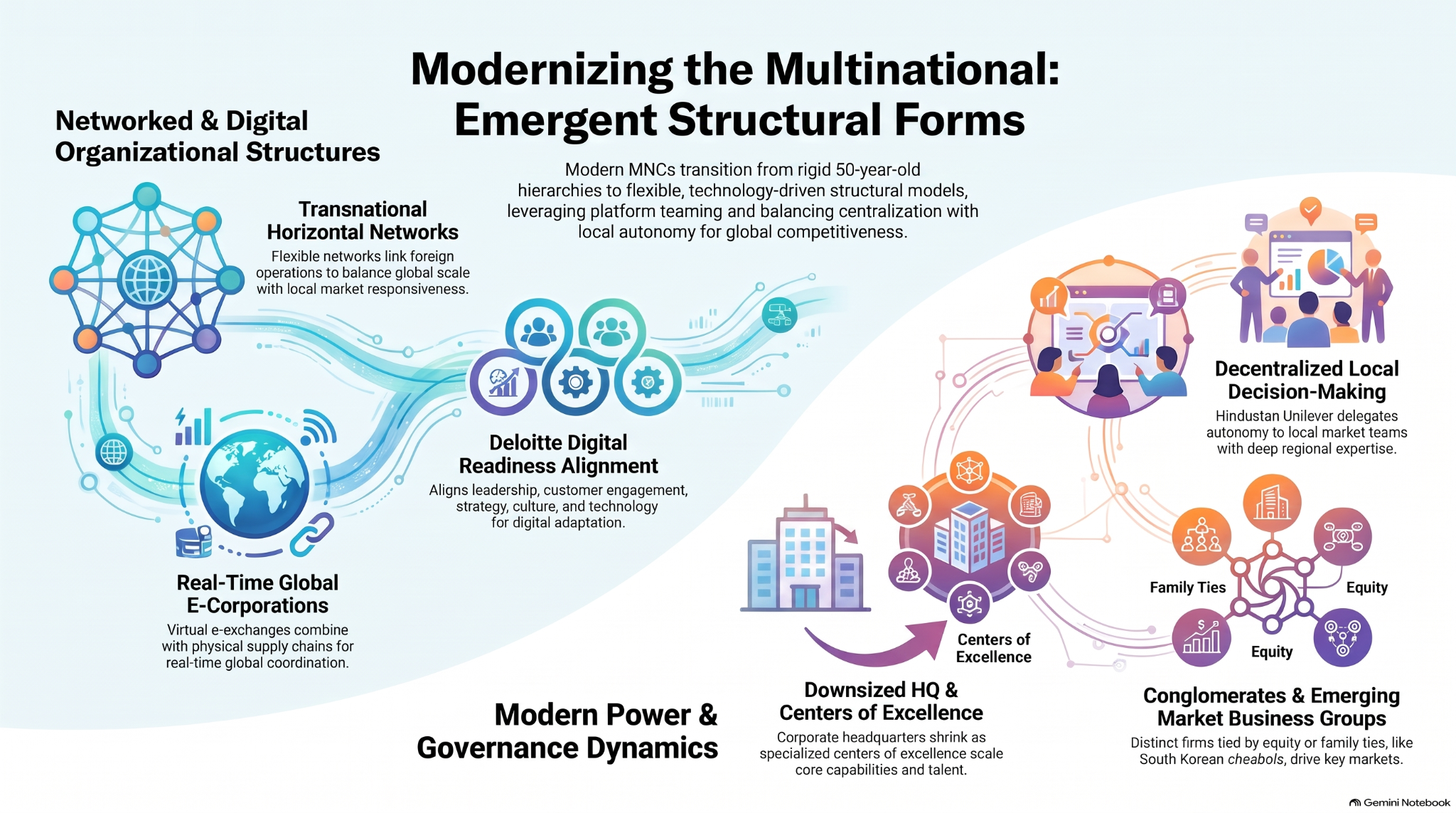
Visualize Your Thinking - Section IV
Consider global teams, digital readiness, and the changing role of headquarters.
Connecting to class activities…
Class Responses
Emergent Structural Forms
8.V Choice of Organizational Form
Click or tap the numbered circles to explore supplemental facts. Use Magnify for a larger view; Reset clears the circles you have visited.
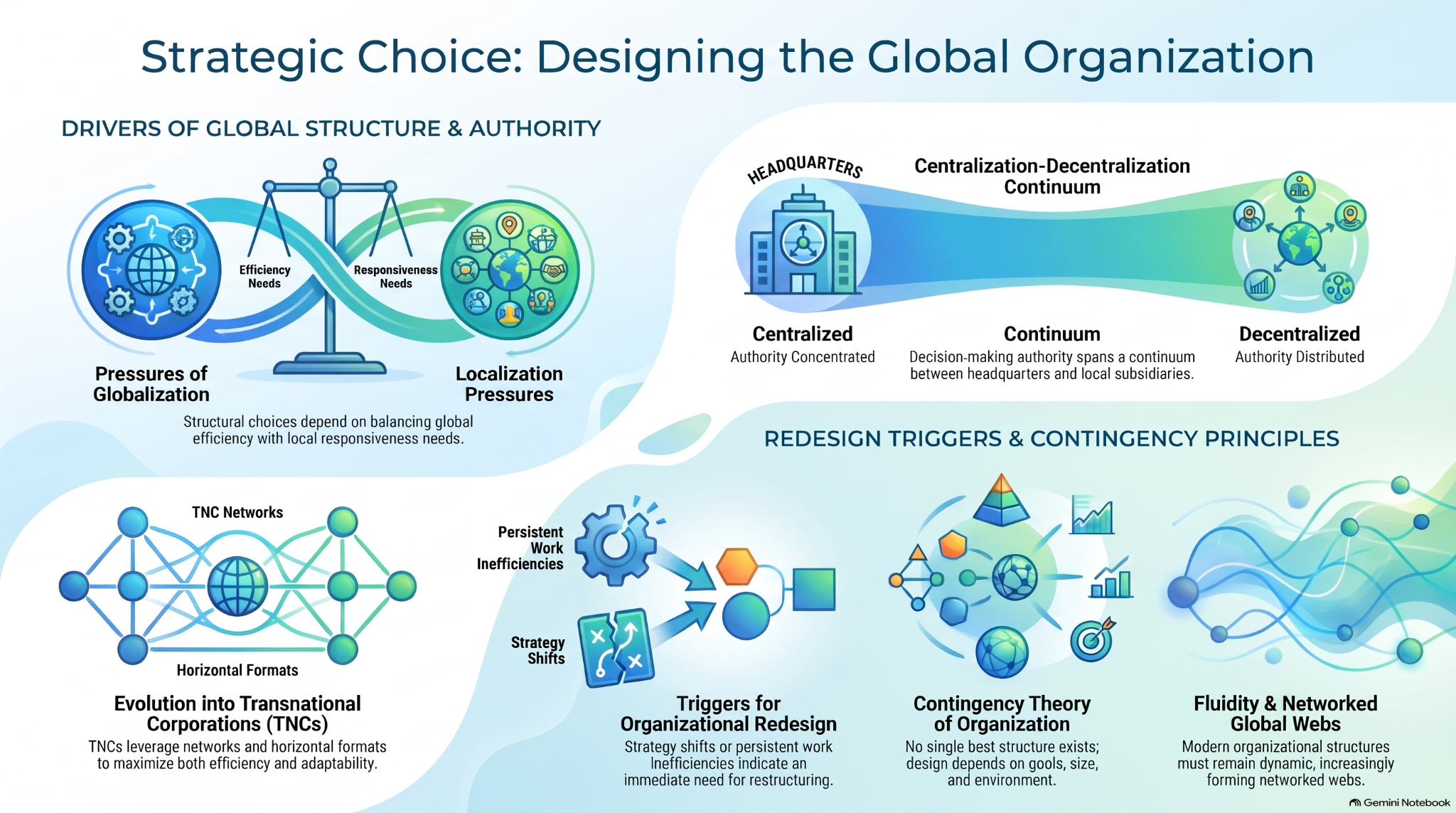
Visualize Your Thinking - Section V
Consider decision authority, organizational redesign, and the fit between structure and strategy.
Connecting to class activities…
Class Responses
Choice of Organizational Form
8.VI Control Systems for Global Operations
Click or tap the numbered circles to explore supplemental facts. Use Magnify for a larger view; Reset clears the circles you have visited.
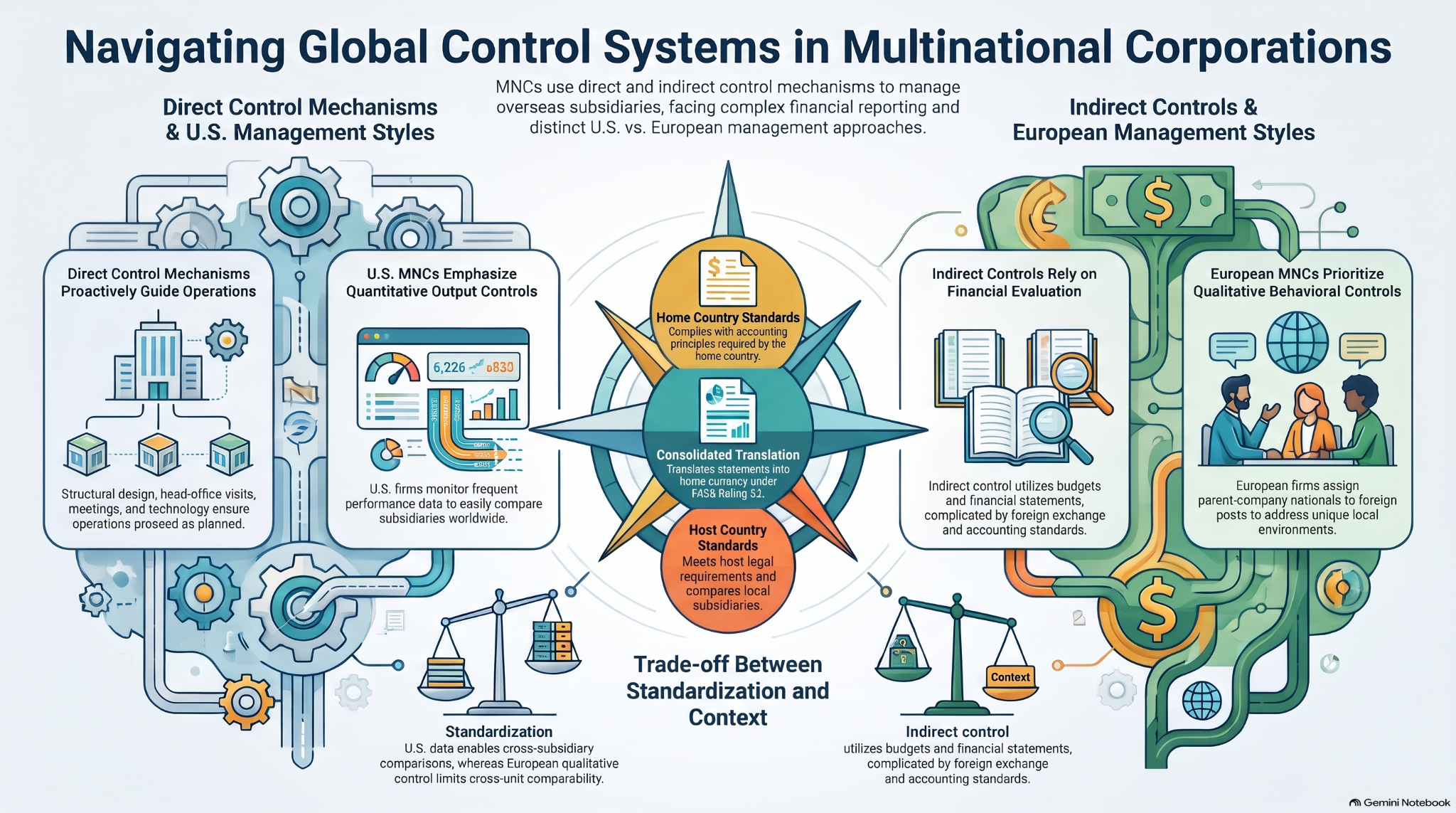
Visualize Your Thinking - Section VI
Consider direct and indirect controls, financial reporting, and the interpretation of subsidiary results.
Connecting to class activities…
Class Responses
Control Systems for Global Operations
8.VII Managing Effective Monitoring Systems
Click or tap the numbered circles to explore supplemental facts. Use Magnify for a larger view; Reset clears the circles you have visited.
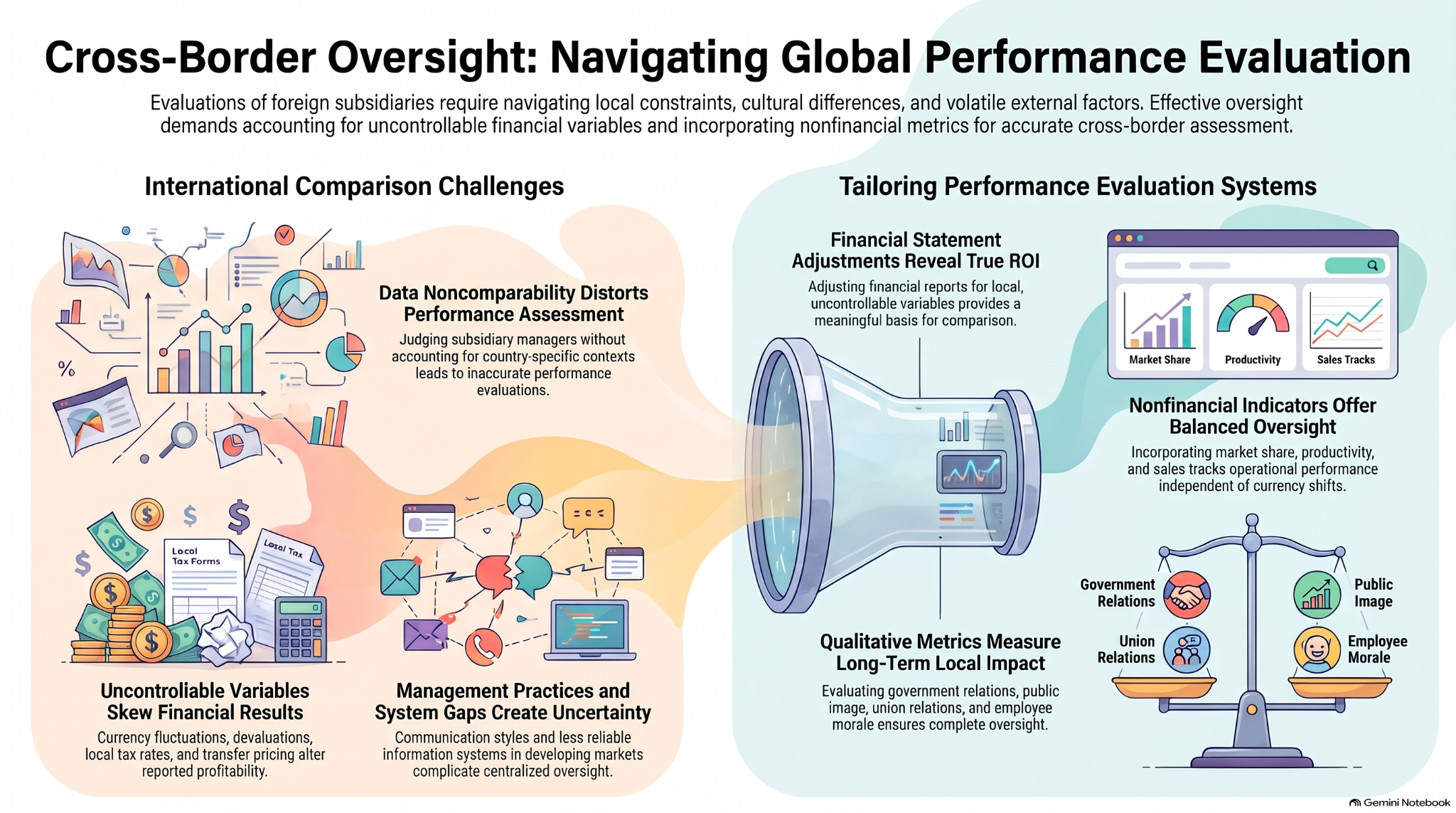
Visualize Your Thinking - Section VII
Consider fair comparisons, local conditions, and financial and nonfinancial performance indicators.
Connecting to class activities…
Class Responses
Managing Effective Monitoring Systems
Chapter 8 Knowledge Check
Answer five multiple-choice questions drawn randomly from a 35-question bank, with five bank questions for each of the seven sections. Each attempt samples the full bank; section coverage will vary.
Explore one answer option at a time and review feedback after each response. Your completed score is saved for your instructor.