From international opportunity to a defensible strategic choice
Why should a company go international—and what would make its strategy work? Chapter 6 connects the reasons for expansion with the strategic formulation process. We will establish mission and objectives, assess external conditions and internal capabilities, compare global and local approaches, and evaluate ways to enter foreign markets.
As you work through the chapter, consider a US-based company choosing its next international market. What opportunity or pressure motivates expansion? Which capabilities will transfer, what must change, and how much control and risk should the company accept? Pay particular attention to emerging markets, where differences in infrastructure, institutions, and customer needs require a strategy suited to the specific setting.

Chapter 6 Overview
Listen to the podcast before exploring the chapter.
6.I Reasons for Going International
Click or tap the numbered buttons within the infographic to explore supplemental notes and applications.
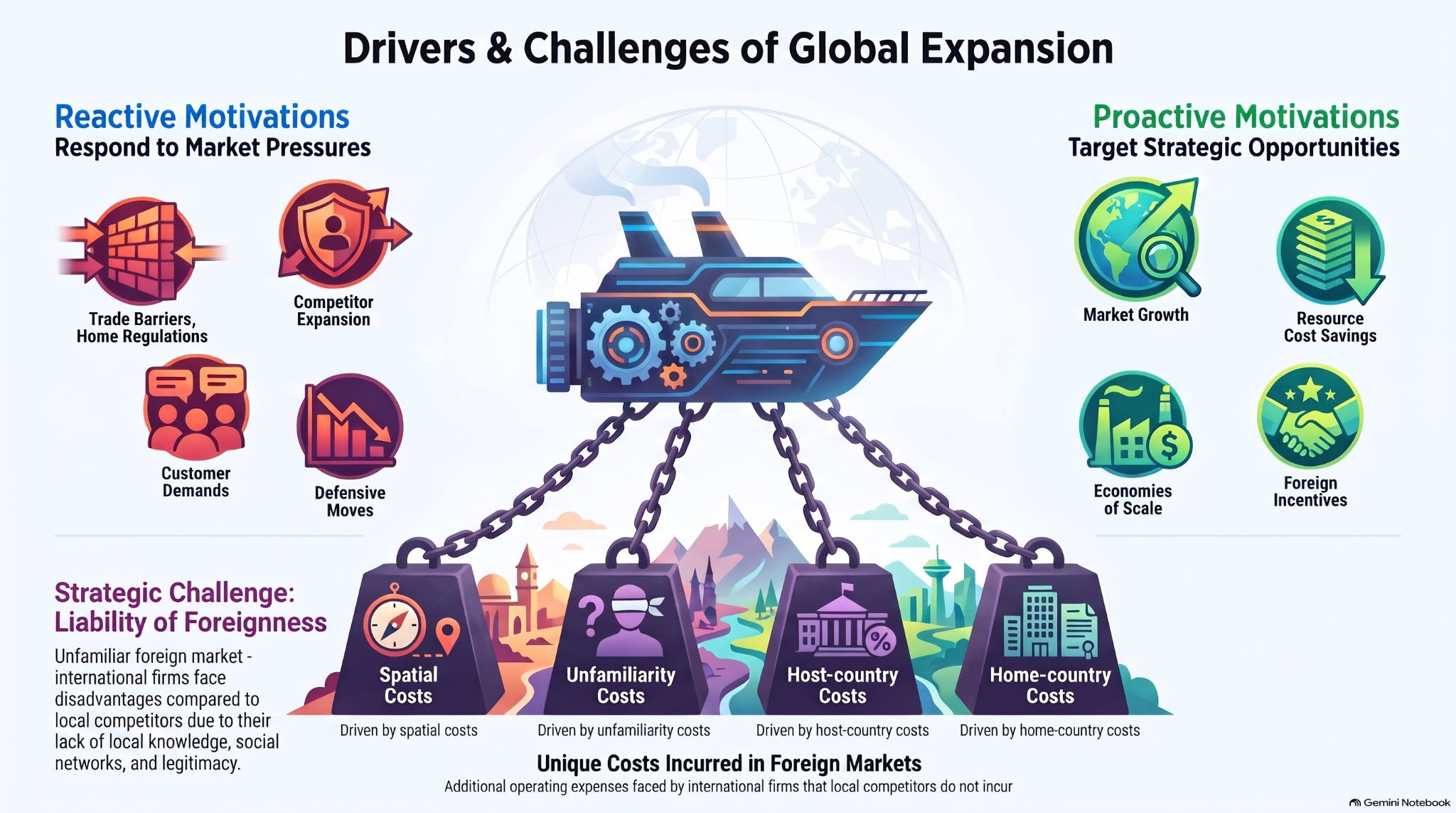
INT315 • International Management • 6.I Reasons for Going International
Use Magnify or turn your device to landscape to explore the numbered buttons.
Visualize Your Thinking - Section I
Evaluate a reason for expansion, make an entry decision, and distinguish reactive from proactive motivations.
Connecting to class activities…
Class Responses
Reasons for Going International
6.II Strategic Formulation Process
Click or tap the numbered buttons within the infographic to explore supplemental notes and applications.
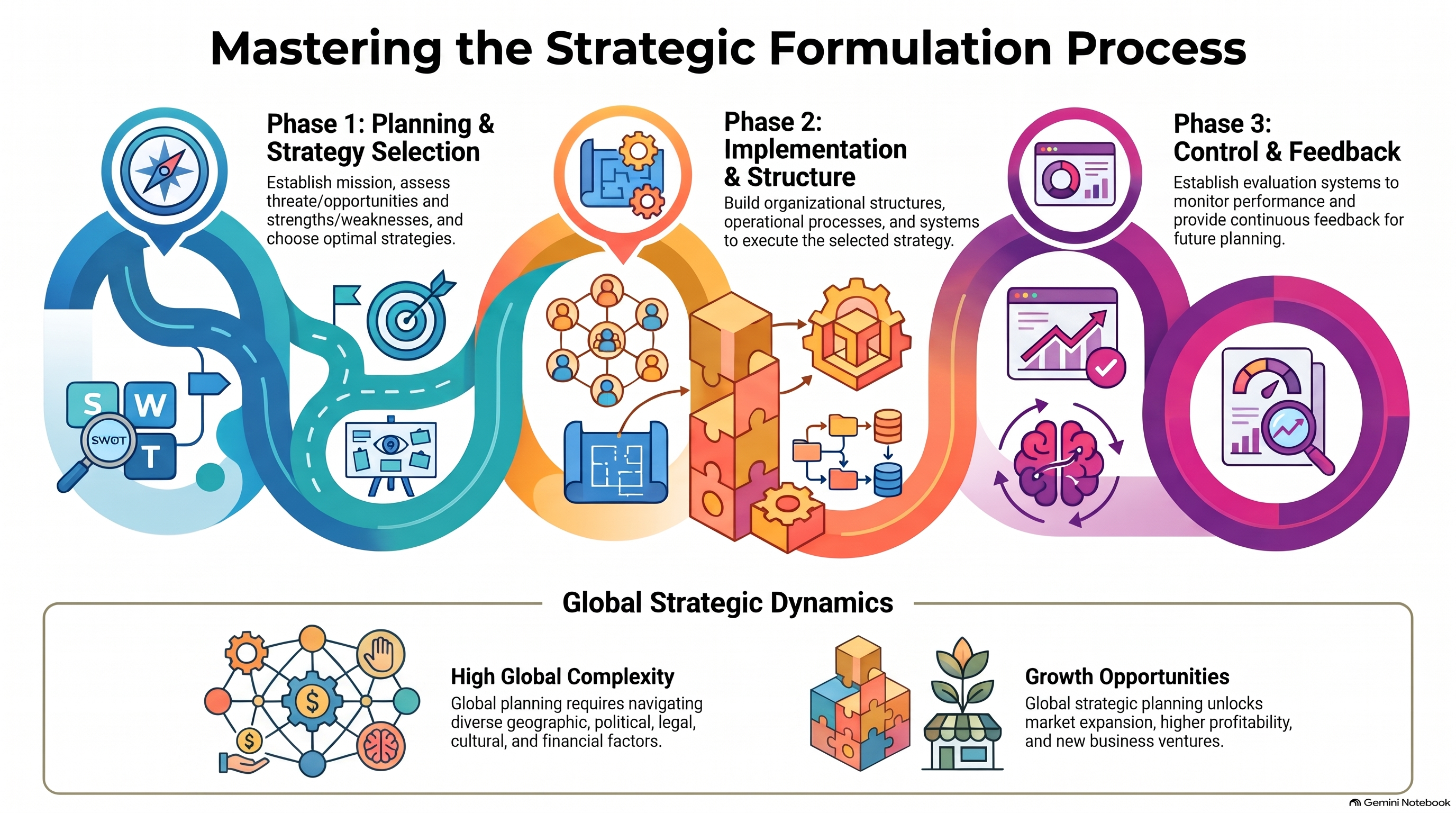
INT315 • International Management • 6.II Strategic Formulation Process
Use Magnify or turn your device to landscape to explore the numbered buttons.
Visualize Your Thinking - Section II
Evaluate persistence, turn an approved plan into action, and diagnose different causes of disappointing results.
Connecting to class activities…
Class Responses
Strategic Formulation Process
6.III Steps in Developing Strategies
Click or tap the numbered buttons within the infographic to explore supplemental notes and applications.
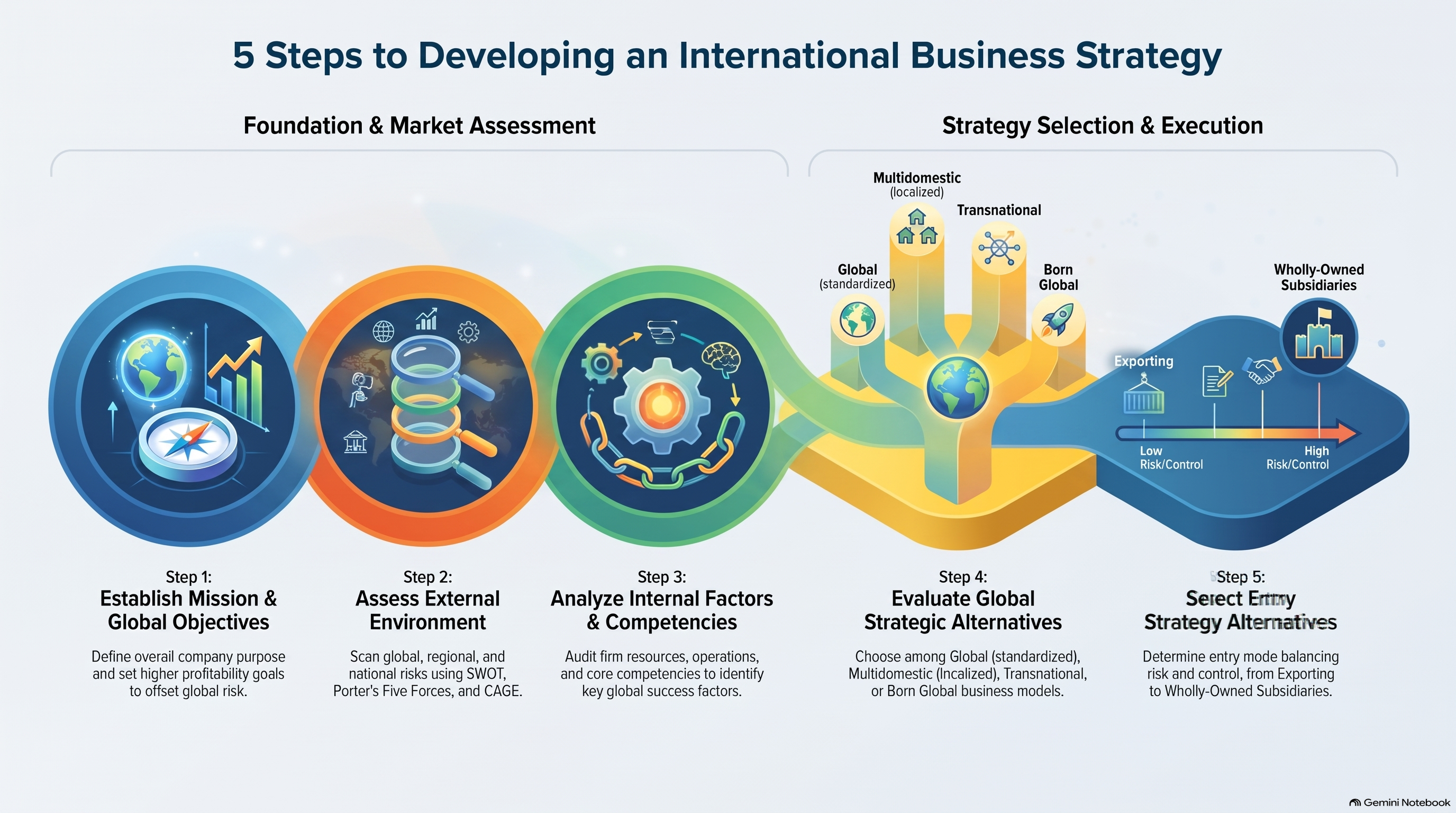
INT315 • International Management • 6.III Steps in Developing Strategies
Use Magnify or turn your device to landscape to explore the numbered buttons.
Visualize Your Thinking - Section III
Test whether strengths transfer, balance efficiency with responsiveness, and choose an entry mode that fits the firm.
Connecting to class activities…
Class Responses
Steps in Developing Strategies
6.IV Strategic Planning for Emerging Markets
Click or tap the numbered buttons within the infographic to explore supplemental notes and applications.

INT315 • International Management • 6.IV Strategic Planning for Emerging Markets
Use Magnify or turn your device to landscape to explore the numbered buttons.
Visualize Your Thinking - Section IV
Weigh the risks of waiting, choose an ownership arrangement, and adapt a business model to local conditions.
Connecting to class activities…
Class Responses
Strategic Planning for Emerging Markets
Chapter 6 Knowledge Check
Apply the chapter’s ideas in five multiple-choice questions. Each attempt draws two questions from Section I and one each from Sections II–IV, from a bank of five questions per section.
Explore one answer option at a time, compare the choices, and review feedback after each response. Your completed score is saved for your instructor.