Understanding culture in the workplace
Culture shapes what people expect from managers and how they interpret behavior at work. This week, Chapter 3 examines how societal and organizational cultures influence management. We will explore cultural value dimensions, the relationship between the Internet and culture, and ways to develop cultural profiles that help managers prepare for unfamiliar settings.
As you compare management styles around the world, consider which of your own expectations you take for granted. Use cultural frameworks to develop questions about a workplace, and check those expectations through observation and discussion. How could a US-based company adapt its management practices while treating employees as individuals?
Chapter 3 Overview
Listen to the podcast before exploring the chapter.
I. Culture and Its Effect on Organizations
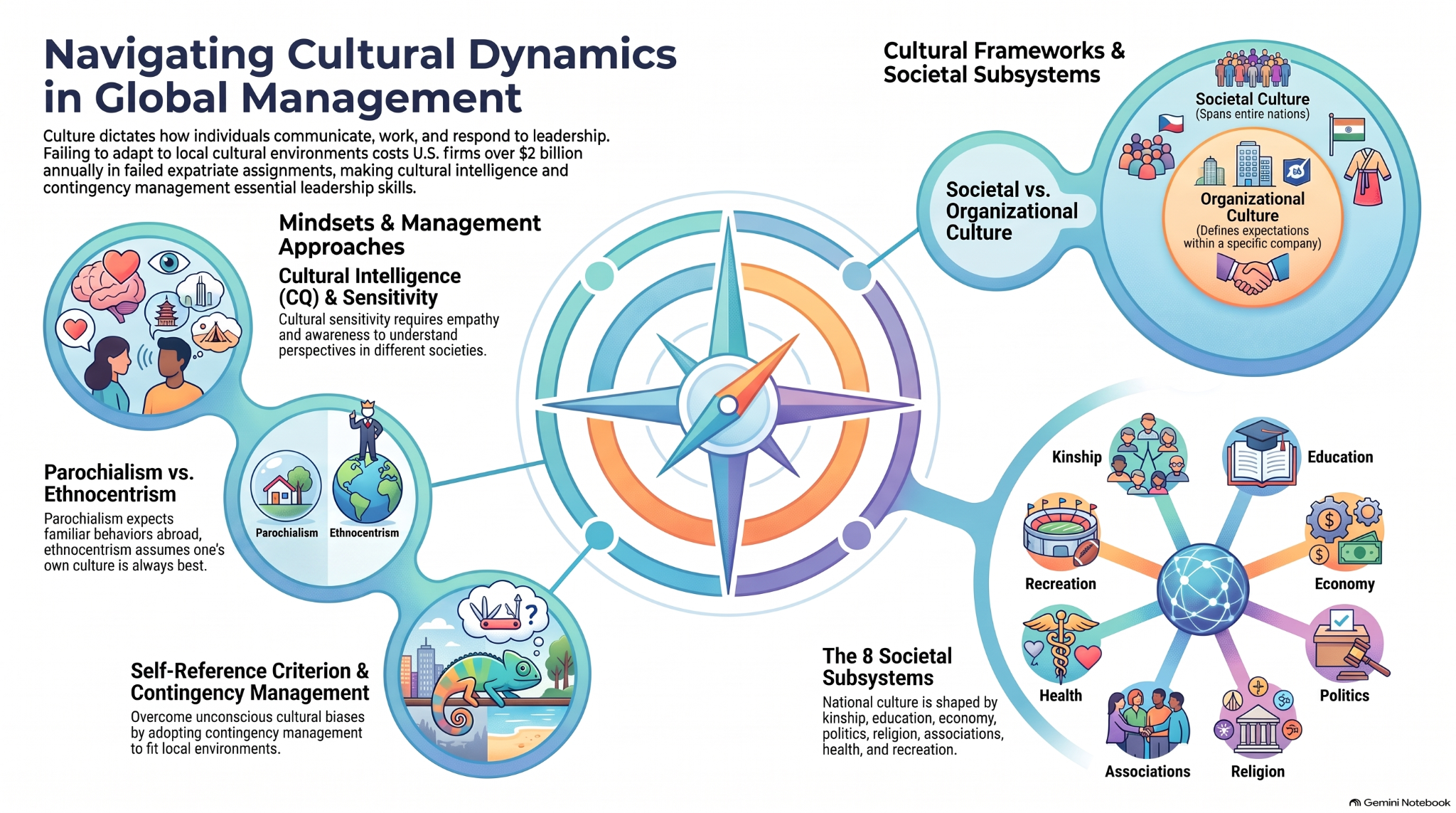
Explore how cultural expectations shape management. Click or tap a numbered button on the infographic to explore additional information.
Magnify the image or rotate your device to explore the numbered buttons.
INT315 • International Management • I. Culture and Its Effect on Organizations
A more recent estimate places the potential cost of a failed international assignment at US$850,000–US$1.25 million per assignment. International SOS reports this range using KPMG estimates in research publicized in 2024. This is a per-assignment estimate covering assignment failure broadly, rather than an updated annual total for US firms or a measure of losses caused solely by cultural adjustment. Source: International SOS · Return on Investment.
Visualize Your Thinking · Section I
Take a position. Make a call. Explain the principle behind your thinking.
Connecting to class activities…
Class Responses
Culture and Its Effect on Organizations
II. Cultural Value Dimensions
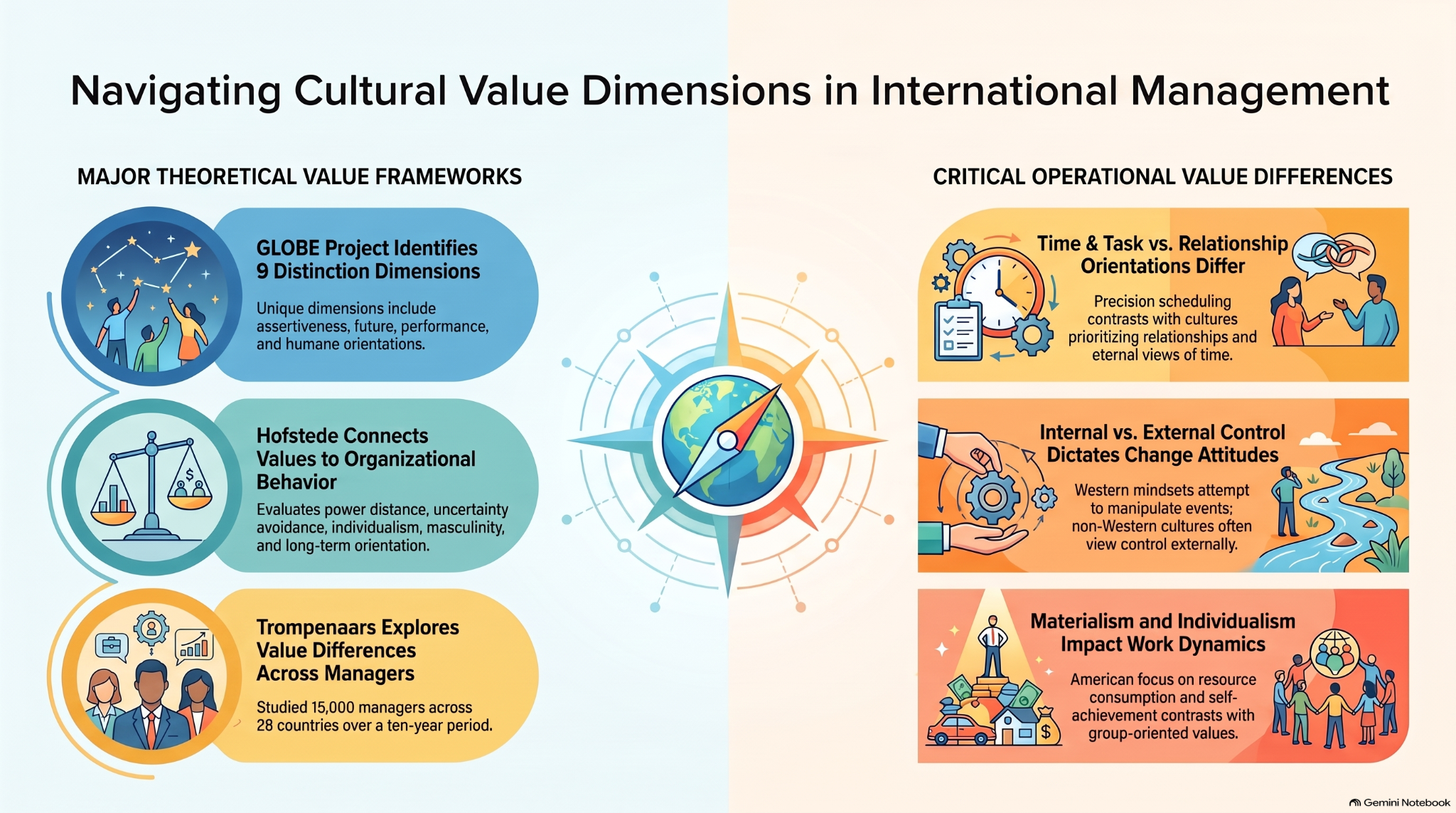
Explore the cultural frameworks and operational value differences discussed in the chapter. Click or tap a numbered button for additional information.
Magnify the image or rotate your device to explore the numbered buttons.
INT315 • International Management • II. Cultural Value Dimensions
Visualize Your Thinking · Section II
Take a position. Make a call. Discuss the cultural values behind your choice.
Connecting to class activities…
Class Responses
Cultural Value Dimensions
III. The Internet and Culture
Explore how the Internet and culture influence one another. Click or tap a numbered button to examine digital expansion, information privacy, and the chapter’s workplace examples.

Magnify the image or rotate your device to explore the numbered buttons.
INT315 • International Management • III. The Internet and Culture
Visualize Your Thinking · Section III
Take a position. Make a call. Consider how technology and culture influence one another.
Connecting to class activities…
Class Responses
The Internet and Culture
IV. Developing Cultural Profiles
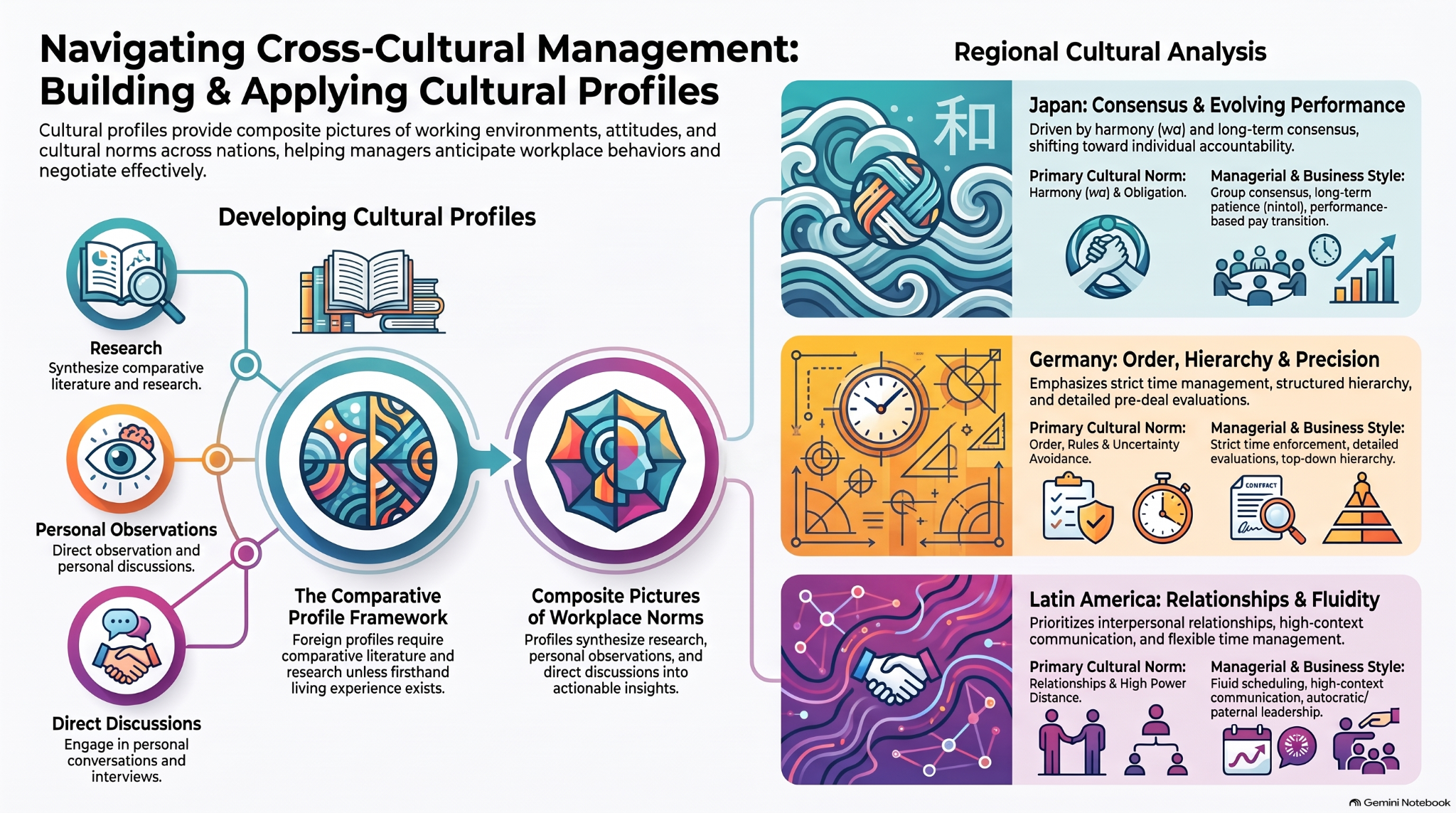
Explore how managers combine research with observation and discussion to build a cultural profile. Click or tap a numbered button to examine the chapter’s comparative examples.
Magnify the image or rotate your device to explore the numbered buttons.
INT315 • International Management • IV. Developing Cultural Profiles
Visualize Your Thinking · Section IV
Take a position. Make a call. Turn a cultural profile into questions you can investigate.
Connecting to class activities…
Class Responses
Developing Cultural Profiles
V. Culture and Management Styles Around the World
Explore the chapter’s examples of business relationships and management practices in Brazil, Saudi Arabia, and Chinese family small businesses. Click or tap a numbered button for additional information.
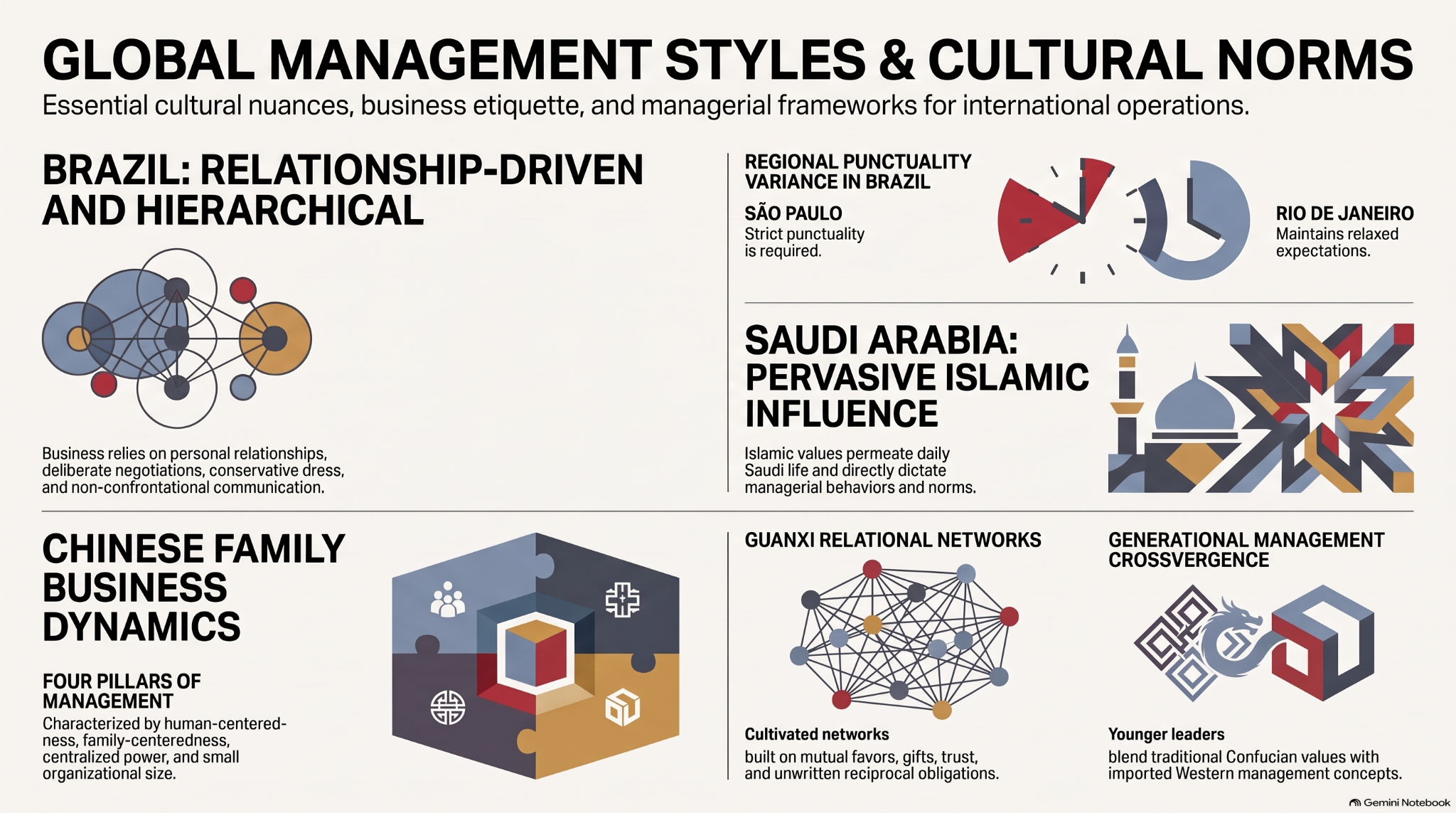
Magnify the image or rotate your device to explore the numbered buttons.
INT315 • International Management • V. Culture and Management Styles Around the World
Visualize Your Thinking · Section V
Take a position. Make a call. Consider how managers adapt practices and build business relationships.
Connecting to class activities…
Class Responses
Culture and Management Styles Around the World
Week 4 Knowledge Check
Apply Chapter 3’s ideas about culture and management. Answer five questions, one from each section, drawn from a rotating 20-question bank. Review feedback after each answer. Your completed score is recorded for your instructor.
Begin Week 4 Knowledge Check →