People as a strategic resource in global operations
International success depends not only on choosing markets and designing organizational structures, but also on selecting, developing, supporting, and rewarding the people who carry out strategy. Chapter 9 examines international human resource management (IHRM) as a vital link between a multinational company’s global ambitions and its day-to-day operations.
This week, we will compare four approaches to staffing international operations—ethnocentric, polycentric, regiocentric, and global—and consider the tradeoffs each creates. We will examine why expatriate assignments succeed or fail, how cross-cultural training and repatriation planning affect performance, and how compensation packages address differences in taxes, living costs, and local expectations. Finally, we will explore the development and compensation of host-country nationals.
Consider a US-based company establishing operations abroad. Should it send experienced headquarters managers, hire local leaders, or recruit talent globally? What support would make an international assignment successful, and how could the company design compensation that is fair, competitive, and financially sustainable?

Chapter 9 Overview
9.I The Role of IHRM in Global Strategy Implementation
Click or tap the numbered circles to explore supplemental facts. Use Magnify for a larger view; Reset clears the circles you have visited.
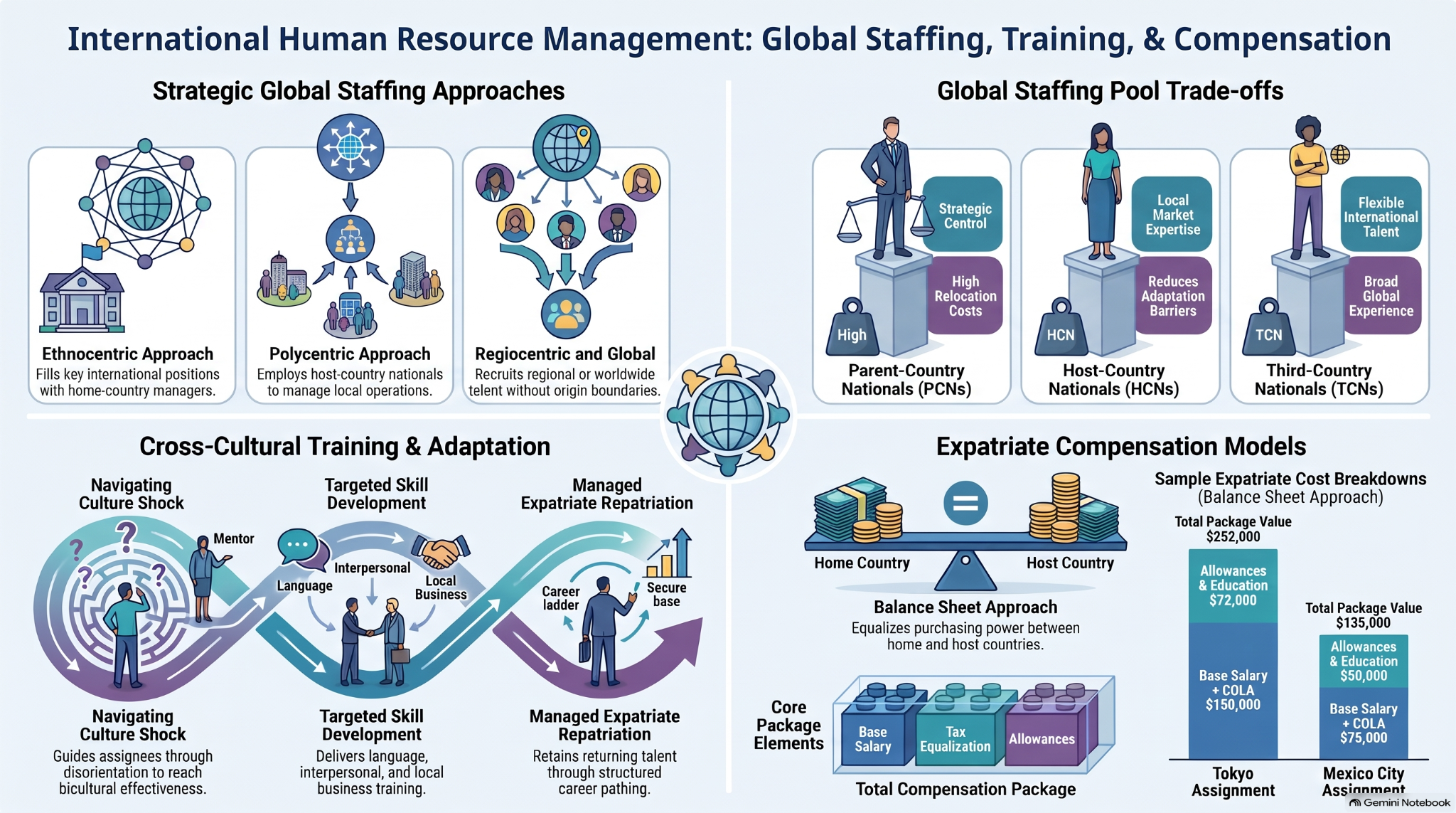
Visualize Your Thinking - Section I
Three decisions about global HR policies, international leadership, and strategic alignment.
Connecting to class activities…
Class Responses
The Role of IHRM in Global Strategy Implementation
9.II Staffing for Global Operations
Global staffing choices include ethnocentric, polycentric, regiocentric, and global approaches. Each has implications for control, local responsiveness, coordination, cost, and access to managerial talent.
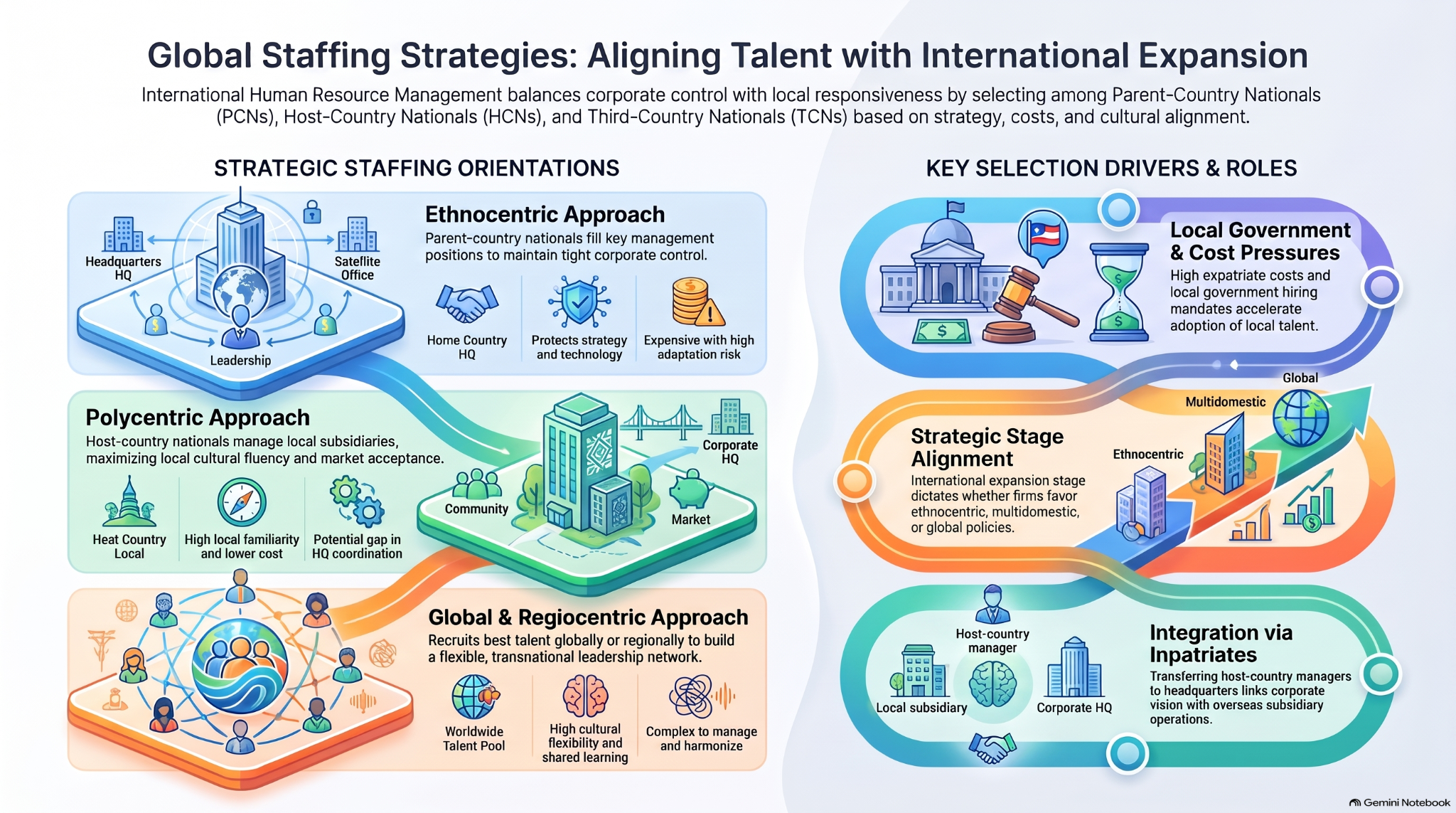
Select a numbered circle for a deeper explanation of global staffing policies and trade-offs.
Visualize Your Thinking - Section II
Three decisions about staffing control, international talent selection, and the evolution of global staffing policies.
Connecting to the shared instructor console…
Class Responses
Results appear here when your instructor reveals them.
Staffing for Global Operations
9.III Managing Expatriates
Click or tap the numbered circles to explore supplemental facts. Use Magnify for a larger view; Reset clears the circles you have visited.
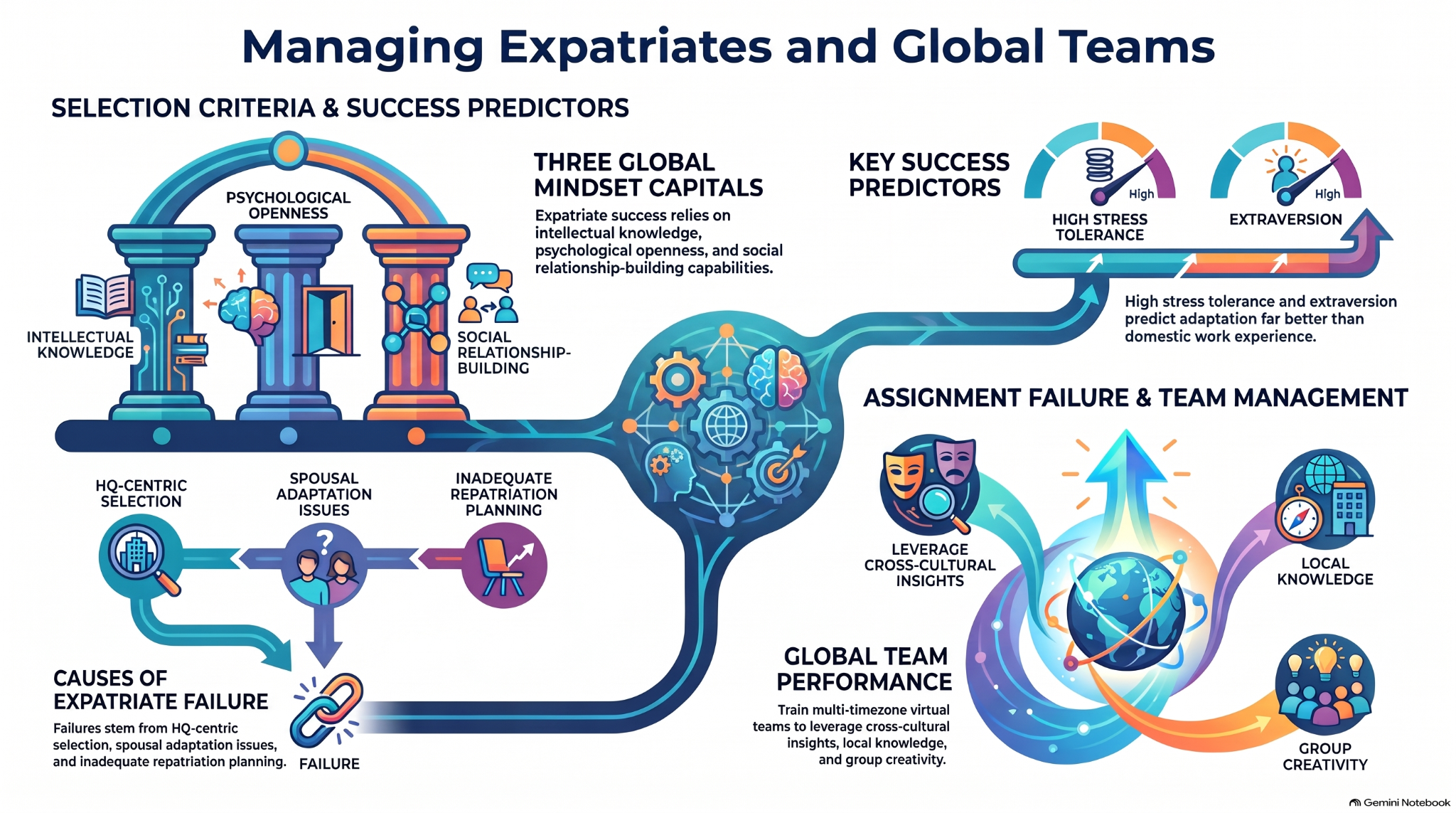
Select a numbered circle for a deeper explanation of expatriate selection, performance, and global-team management.
Visualize Your Thinking - Section III
Explore expatriate selection, managing a struggling international assignment, and global teamwork.
Connecting to the shared instructor console…
Class Responses
Results appear here when your instructor reveals them.
Managing Expatriates
9.IV Expatriate Training and Development
Click or tap the numbered circles to explore supplemental facts. Use Magnify for a larger view; Reset clears the circles you have visited.
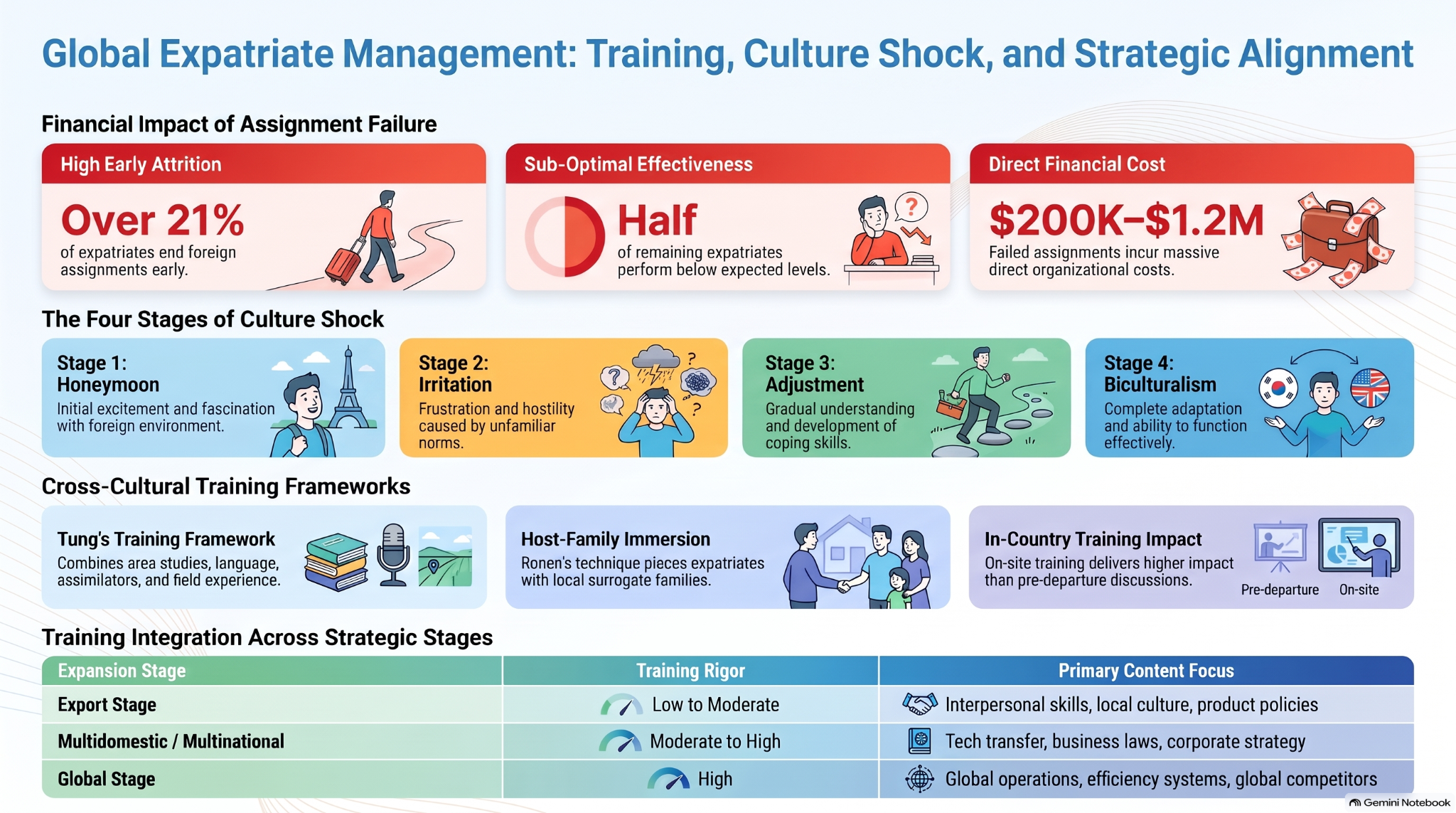
Select the numbered circles for additional information about expatriate training, culture shock, and strategic alignment.
Visualize Your Thinking - Section IV
Three decisions about expatriate training investment, preparation, and continuous development.
Connecting to the shared instructor console…
Class Responses
Results appear here when your instructor reveals them.
Expatriate Training and Development
9.V Compensating Expatriates
Click or tap the numbered circles to explore supplemental facts. Use Magnify for a larger view; Reset clears the circles you have visited.
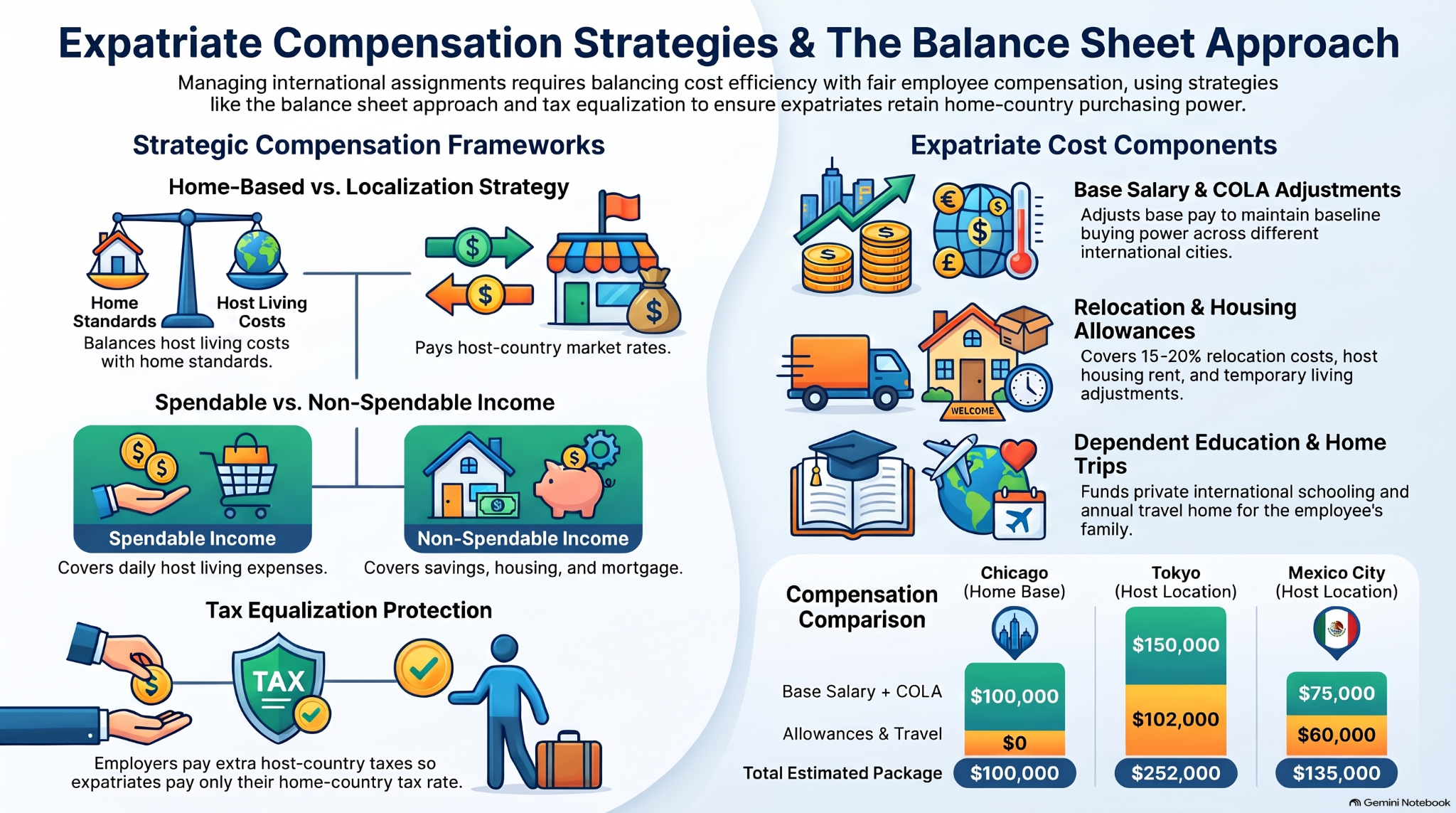
Select a numbered circle for a deeper explanation of expatriate compensation strategy and package design.
Visualize Your Thinking - Section V
Three choices about compensation equity, expatriate pay approaches, and assignment costs.
Connecting to the shared instructor console…
Class Responses
Results appear here when your instructor reveals them.
Compensating Expatriates
9.VI Training and Compensating Host-Country Nationals
Click or tap the numbered circles to explore supplemental facts. Use Magnify for a larger view; Reset clears the circles you have visited.
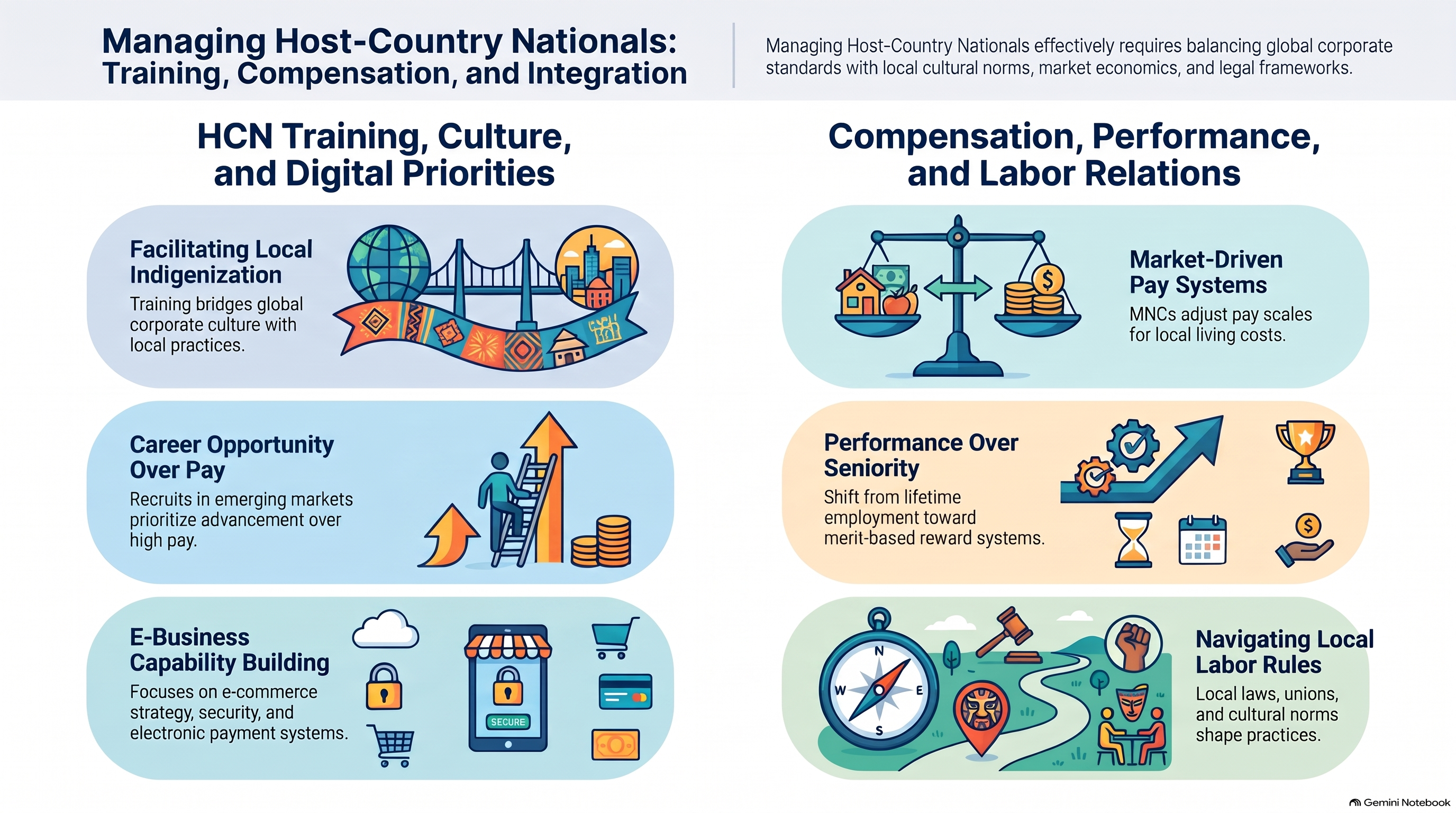
Select a numbered circle to learn more about training and compensating host-country nationals.
Visualize Your Thinking - Section VI
Three choices about global standards, developing local leadership, and compensation fairness for host-country nationals.
Connecting to the shared instructor console…
Class Responses
Results appear here when your instructor reveals them.
Training and Compensating Host-Country Nationals
Chapter 9 Knowledge Check
Test your understanding of global HR strategy, staffing, expatriate management, training, compensation, and host-country nationals. Five questions are randomly selected from a 30-question bank—five questions are available for each of the six sections.
Launch Week 12 Knowledge Check →
One question at a time • Running tally • Results reported to your instructor