Fictional teaching case. Dates and policy projections below belong to the case setting.
The Conversation
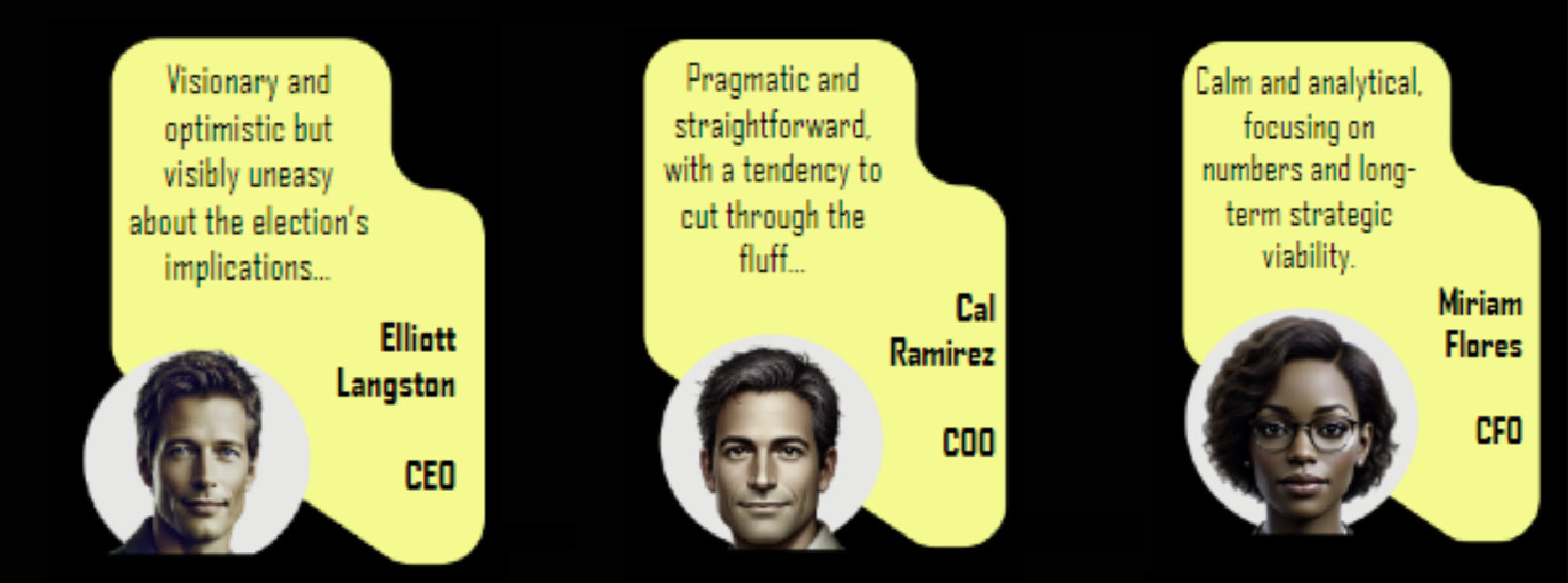
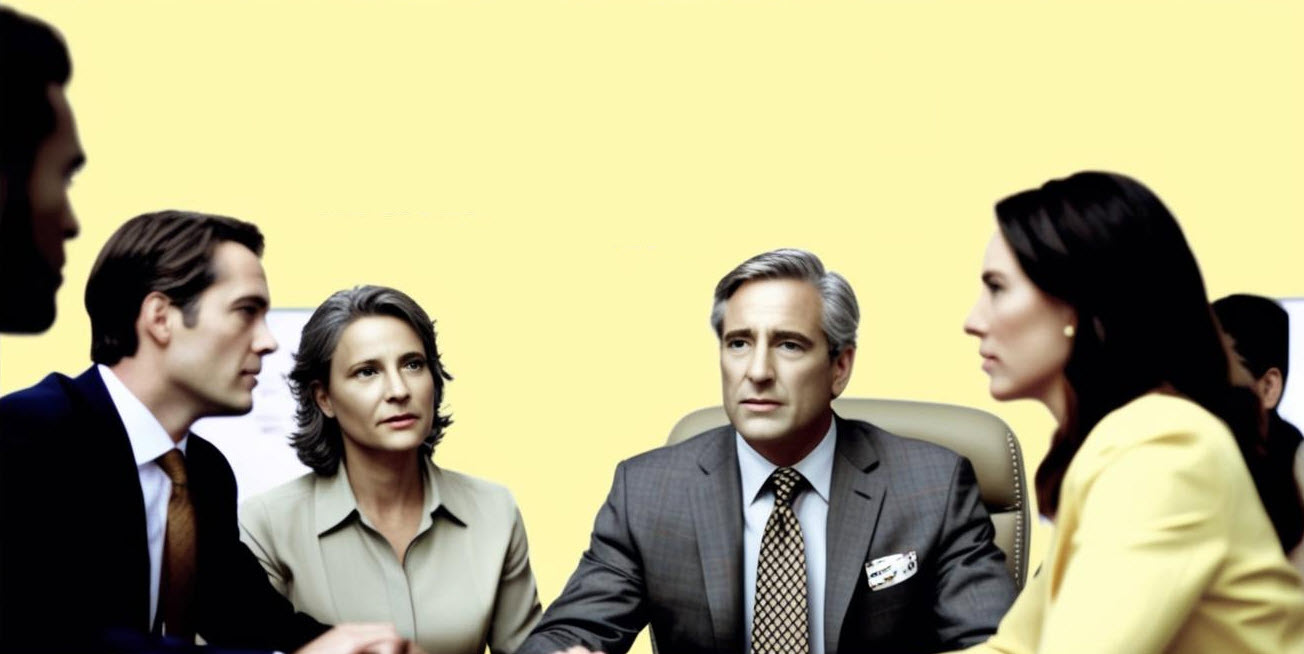
The scene opens with Miriam presenting slides showing projected revenue impacts from anticipated policy changes under the new administration.
Miriam: (adjusting her glasses)
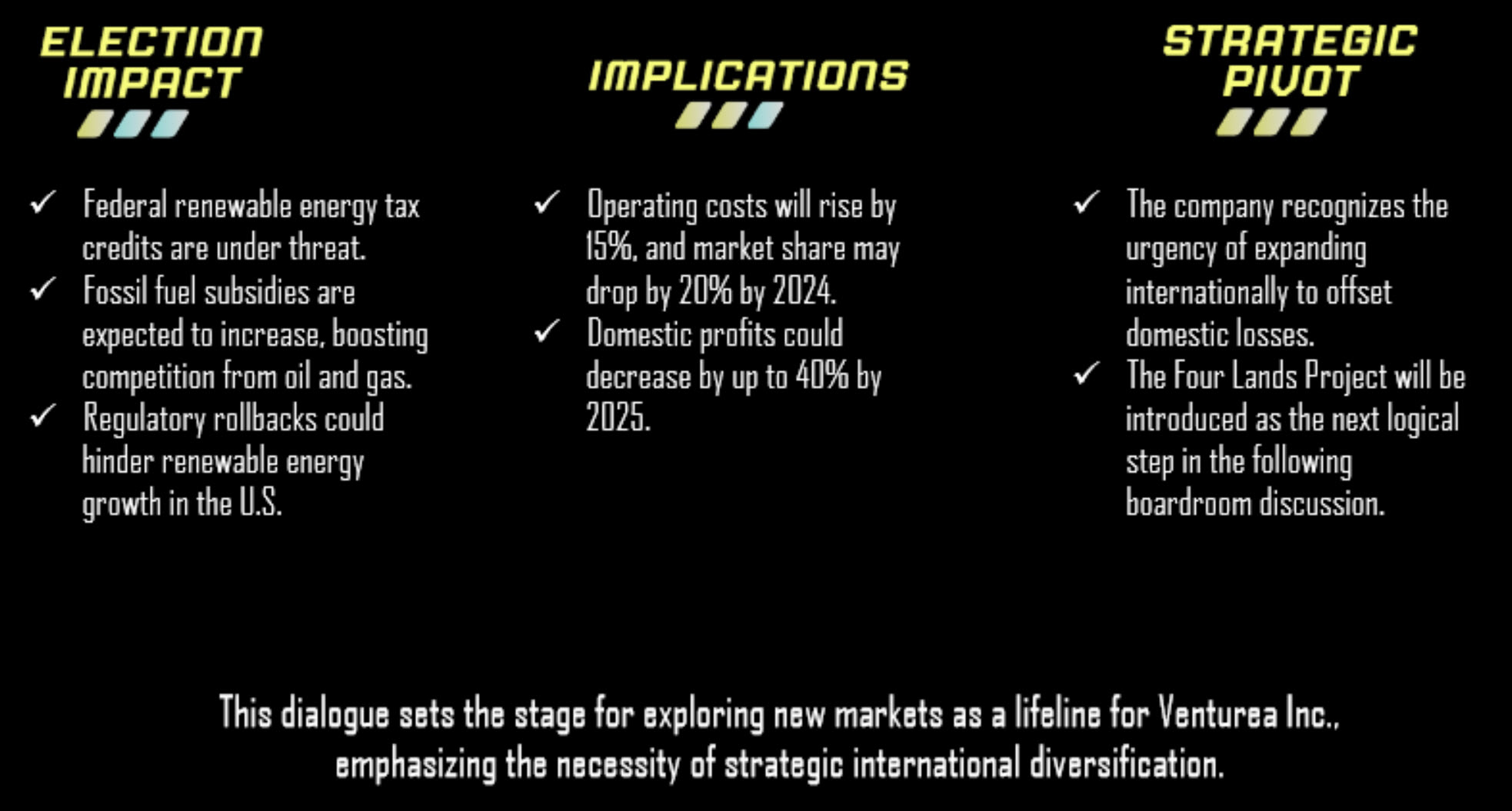
“As you can see, we’re facing a potential 30% reduction in domestic revenue by 2025 if the federal renewable energy tax credits are repealed. That’s assuming fossil fuel subsidies ramp up as projected. The Clean Energy Standard rollback alone could erase nearly $50 billion in sector-wide investments over the next four years.”
Elliot: (leaning forward, hands clasped)
“Fifty billion? That’s... catastrophic. And for us? What’s the bleeding look like, Miriam?”
Miriam:
“Without tax credits, our operating costs for solar panel installations and wind projects in the Midwest will increase by about 15%. Add to that the rising competition from gas-fired plants benefiting from fossil fuel incentives, and we’re looking at losing around 20% of our market share by 2024. Worst-case scenario? Our domestic profits could dip by 40%.”
Cal: (crossing his arms, leaning back)
“So, in plain English, we’re toast in the U.S. unless we act fast. This administration’s made it clear they’re doubling down on oil and gas. The Keystone pipeline? Back on the table. Offshore drilling? Full steam ahead. Renewables? We’re getting kicked to the curb.”
Elliot: (running a hand through his hair, frustration evident)
“Damn it. We’ve worked too hard to let political whims sink us. What about state-level incentives? Can California, New York, and the usual suspects keep us afloat?”
Miriam:
“State-level incentives can help mitigate losses, but they’re not enough to fill the gap. California, for instance, still has aggressive renewable energy goals, but its permitting delays and grid limitations are bottlenecks. We’ll see pockets of growth, but nothing close to what we’re losing federally.”
Cal:
“Plus, let’s not forget how fragmented the state market is. For every California, there’s a Texas doubling down on oil. The map’s a mess, Elliot. Banking on state incentives is like patching a sinking ship with duct tape.”
Elliot: (standing, pacing)
“Okay, okay. So, the domestic market is shrinking, and state incentives won’t save us. But we can’t just sit here and wait for the ship to go down. What’s the alternative?”
Miriam: (calmly, flipping to a new slide)
“We need to look outward. The domestic market won’t sustain us under these conditions. Expanding internationally isn’t just an option—it’s a necessity. Markets like the EU, Southeast Asia, and even Latin America are investing heavily in renewables. But we need to be strategic about where we go.”
Cal: (nodding slowly)
“She’s right. Domestic isn’t our battleground anymore. It’s survival of the fittest, and our fitness is global.”
Elliot: (stopping mid-pace)
“So, you’re saying it’s time to pivot. Full-scale global expansion?”
Miriam:
“Not full-scale, but targeted. We need to find high-growth, high-potential markets that align with our expertise in solar and wind. And we need to act fast—preferably before the bleeding starts to show in our quarterly reports.”
Cal:
“And before our investors start asking why we’re losing market share while competitors are planting flags overseas. Look, we’ve talked about diversifying internationally before. Now it’s not just a nice-to-have; it’s a must-have.”
Elliot: (nodding, resolve growing)
“Alright. Let’s stop the bleeding here by planting seeds elsewhere. Miriam, start pulling data on emerging markets with strong renewable energy potential. Cal, prep the operations team for an international pivot. I want hard numbers and actionable plans on my desk by next week.”
Cal: (grinning slightly)
“Finally, you’re speaking my language.”
Miriam:(smiling subtly)
“I’ll prepare projections for at least four potential markets, focusing on their growth trajectories, political environments, and energy policies. We’ll have options ready.”
Elliot: (clapping his hands)
“Good. Let’s not just survive this transition—we’ll thrive. Time to show the world what Venturea can do.”